USuncutMN says: Tax the corporations! Tax the rich! Stop the cuts, fight for social justice for all. Standing in solidarity with http://www.usuncut.org/ and other Uncutters worldwide. FIGHT for a Foreclosure Moratorium! Foreclosure = homelessness. Resist the American Legislative Exchange Council, Grover Norquist and Citizen's United. #Austerity for the wheeler dealers, NOT the people.


We Are The 99% event

USuncutMN supports #occupyWallStreet, #occupyDC, the XL Pipeline resistance Yes, We, the People, are going to put democracy in all its forms up front and center. Open mic, diversity, nonviolent tactics .. Social media, economic democracy, repeal Citizen's United, single-payer healthcare, State Bank, Operation Feed the Homeless, anti-racism, homophobia, sexISM, war budgetting, lack of transparency, et al. Once we identify who we are and what we've lost, We can move forward.


Please sign and SHARE

Showing posts with label France. Show all posts

Wednesday, November 9, 2011

European debt crisis spiralling out of control

Siri
Wow..just...wow ~ Reports that Germany and France have begun talks to break up the eurozone via


European debt crisis spiralling out of control

Reports that Germany and France have begun talks to break up the eurozone amid fears that Italy will be too big to rescue
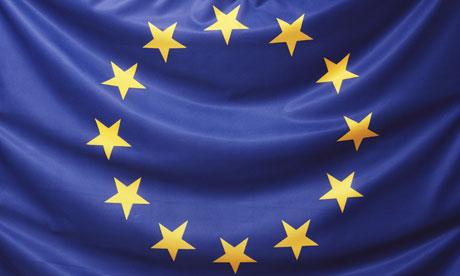
Debt crisis sets markets in turmoil amid reports of talks about the break up of the eurozone. Photograph: Jeff Spielman/Getty Images  

Debt crisis sets markets in turmoil amid reports of talks about the break up of the eurozone. Photograph: Jeff Spielman/Getty Images
 
Fears that Europe's sovereign debt crisis was spiralling out of control have intensified as political chaos in Athens and Rome, and looming recession, created panic on world markets.

Reports emerging from Brussels said that Germany and France had begun preliminary talks on a break-up of the eurozone, amid fears that Italy would be too big to rescue.

Despite Silvio Berlusconi's announcement that he would step down as prime minister once austerity measures were pushed through parliament, a collapse of investor confidence in the eurozone's third-biggest economy sent interest rates in Italy to the levels that triggered bailouts in Portugal, Greece and Ireland.

Italian bond yields surged through the critical 7% mark, at one point hitting 7.5%, amid concern that the deteriorating situation had moved the crisis into a dangerous new phase.

In Athens talks to appoint a prime minister to succeed George Papandreou were in deadlock, and will resume on Thursday morning. The Italian president, Giorgio Napolitano, sought to reassure the markets by promising that Berlusconi would be leaving office soon.

Angela Merkel, the German chancellor, said the situation had become "unpleasant", and called for eurozone members to accelerate plans for closer political integration. "It is time for a breakthrough to a new Europe," she said. "Because the world is changing so much, we must be prepared to answer the challenges. That will mean more Europe, not less Europe."

The president of the European commission, José Manuel Barroso, issued a new call for the EU to "unite or face irrelevance" in the face of the mounting economic crisis in Italy. "We are witnessing fundamental changes to the economic and geopolitical order that have convinced me that Europe needs to advance now together or risk fragmentation. Europe must either transform itself or it will decline. We are in a defining moment where we either unite or face irrelevance," he said.

Senior policymakers in Paris, Berlin and Brussels are reported to have discussed the possibility of one or more countries leaving the eurozone, while the remaining core pushes on toward deeper economic integration, including on tax and fiscal policy. "France and Germany have had intense consultations on this issue over the last months, at all levels," a senior EU official in Brussels told Reuters, speaking on condition of anonymity because of the sensitivity of the discussions.

Financial regulators across Europe were last night carefully monitoring the health of their heavily exposed banks, amid concern that the turmoil could lead to a debt default, or even the break-up of the euro.

George Osborne, just three weeks away from delivering his autumn statement on the health of the economy, believes Europe's problems are blighting the UK's growth prospects, but he will use the sell-off of Italian bonds to insist there is no alternative to his austerity plans.

Nick Clegg, the deputy prime minister, spent Wednesday in Brussels urging the council president, Herman Van Rompuy, and a clutch of EU commissioners to focus on growth, and not further treaty changes, warning that if Europe does not become more competitive it will end up in a spiral of perpetual decline. Both he and David Cameron are urging EU integrationists to recognise that EU Treaty changes in the next few months would be a massive distraction and no cure for the underlying economic crisis. He pointed out that they would require referendums in at least four countries.

The latest chapter in the ongoing sovereign debt crisis came as Bank of England policymakers gathered for their monthly two-day interest rate-setting meeting. The monetary policy committee announced £75bn-worth of quantitative easing last month in an effort to prevent a recession.

City analysts believe the renewed turmoil in the eurozone is pointing to a deep recession in Europe. "It's unavoidable that there will be an outright contraction in the fourth quarter of this year, and a 60%-70% chance of another decline in the first quarter of next year," said Nick Parsons, head of strategy at National Australia Bank.

Shares fell heavily on both sides of the Atlantic. The Italian stock market lost 4% of its value. The FTSE100 index of leading shares closed 106.96 points down, at 5460.38. The Dow Jones closed 389 points down at 11,780.94.

Christine Lagarde, head of the IMF, told a financial forum in Beijing that Europe's debt crisis risked plunging the global economy into a Japan-style "lost decade" of weak growth and deflation.

"Our sense is that if we do not act boldly and if we do not act together, the economy around the world runs the risk of a downward spiral of uncertainty, financial instability and potential collapse of global demand … we could run the risk of what some commentators are already calling the lost decade."

Simon Derrick, currency strategist at BNY Mellon, said: "We're at the point of asking the question, if I put my money into Italy, am I going to get it back? The fact is, there isn't a safety net." He added that the mood in the City was reminiscent of Black Wednesday, in September 1992, when the UK crashed out of the European Exchange Rate Mechanism.

The surge in Italian bond yields was eventually capped by the European Central Bank, which intervened in the markets to buy limited quantities of Italian debt. But analysts say the ECB will eventually have to step up its action, and act as a lender of last resort to bring interest rates down to pre-crisis levels. Sony Kapoor, director of Brussels-based think-tank Re-Define, said: "We may be fairly close to the point where an existential threat to the eurozone, and hence the ECB, is on the horizon. This could easily spiral out of control."

The ECB is seen as the only institution with the firepower to rescue Italy, because the EU lacks the resources to bail out such a large economy. Ben May, of Capital Economics, said Italy would need a €650bn bailout to keep it out of financial markets for the next three years or so. "The European Financial Stability Facility will not be able to provide a bailout of this size," he said.

Officials in Brussels insisted on Wednesday there would be no rescue package for Rome, saying, "financial assistance is not on the cards". A key test will come on Thursday morning when Italy has to raise €5bn from investors on the bond market.

Economic and monetary affairs commissioner Olli Rehn ratcheted up the political pressure on Italy with a strongly-worded letter to finance minister Giulio Tremonti. In it, Rehn demanded concrete written details of how Italy will implement each of the 39 separate reform measures it has promised to undertake.

In Rome the head of state, Giorgio Napolitano, insisted that Berlusconi would be leaving office soon, and that his departure would not be the prelude to a lengthy period of political instability.

His intervention came after hurried consultations with the speakers of both houses of parliament to ensure the speediest possible approval for a package of economic reform and austerity measures agreed with the European institutions. On Tuesday evening, after losing his majority in the chamber of deputies, Berlusconi told Napolitano he would resign.

But, to prevent the economic measures being blocked by the fall of his government, he said he would only go once the package had been approved.

As concern grew that he might delay the passage of the legislation, which has become a litmus test of Italy's credibility in the markets, Berlusconi said he would insist on holding new elections and one of his ministers speculated that could be next February.

After the yield on Italy's benchmark bonds soared above 7%, taking interest rates to a level beyond which previous euro zone debt crisis victims have sought a bail-out, the president issued a statement to say the new economic measures would be "approved in the space of a few days" and that there was "no uncertainty over the prime minister's decision to resign".

Napolitano, who cannot begin consultations with party leaders until Berlusconi leaves office, said that either a new government would be formed "to take every necessary decision" or an election would be held "within the shortest time".

That would still mean a vote was not held until January. But a source close to the president stressed to the Guardian that "early elections are not a foregone conclusion."

Wednesday, September 7, 2011

Berlin Lays Groundwork for a Two-Speed Europe

Oh!  Oh!

Divide and Rescue

Berlin Lays Groundwork for a Two-Speed Europe

Photo Gallery: The European Divide
Photos
Getty Images
Chancellor Angela Merkel has always rejected a two-track Europe. But with the euro crisis persisting, Berlin is now considering far-reaching new powers for the Euro Group -- to the detriment of the European Commission. Could it work? 

By SPIEGEL Staff
 
Herman Van Rompuy tends to be overlooked whenever European heads of state and government meet for their summits. The Belgian politician, president of the European Council, is an inconspicuous man with a receding hairline and metal-rimmed glasses, someone who doesn't seek the limelight, and who enjoys writing haikus about nature in his free time. He is one of the most powerful politicians in Europe, but he is almost unknown in most EU countries, including Germany.

Van Rompuy has been traveling a lot lately. His current schedule includes meetings with Finnish Prime Minister Jyrki Katainen and French President Nicolas Sarkozy. On Monday, Van Rompuy meets with German Chancellor Angela Merkel in Berlin, where he can look forward to a particularly pleasant conversation. Merkel wants to propose giving the European Council president even more power. The chancellor is planning her next political policy reversal . Until very recently, she has insisted that she was firmly opposed to creating divisions within Europe. But under the pressure of the euro crisis , Merkel has recently been thinking about abandoning the concept of a unified EU -- and assigning a key role to Van Rompuy in the process.
The EU has always been careful to ensure that all members acted in unison, whether it involved moving forward or standing still. But in times in which the common currency threatens to break apart, the 17 nations of the euro zone need a common economic and financial policy. Otherwise, as the crisis has demonstrated, the euro cannot function.
A New Power Center?
Today, it is primarily Great Britain that is preventing the EU from growing closer together. Merkel, though, has had enough -- and is now planning a two-speed Europe. It would mean tightly interlocking the countries of the euro zone, possibly by means of a separate treaty that would apply in parallel to the EU Treaty of Lisbon. This was the concept German Finance Minister Wolfgang Schäuble proposed last week to the leadership of his party, the center-right Christian Democratic Union (CDU). Merkel sees Van Rompuy, who already chairs the council of the 27 EU leaders, as the head of the new power center.
In addition to the club of 27 nations that primarily manages the common domestic market as it has done until now, Merkel envisions a tight alliance of the 17 euro-zone members -- one which would unify their fiscal, budgetary and social policies. This would create a two-class club, raising questions like: What happens to the European Commission? Will it still be responsible for economic matters in the euro zone, or will there be a new organization? The same questions apply to the European Parliament and the European Court of Justice in Luxembourg. Would all of these institutions have to be duplicated, meaning even more bureaucracy, effort and expense?
There are no answers yet to these questions, and there is already plenty of skepticism. The European Commission is just as opposed to Merkel's plans as most members of the European Parliament and many smaller EU countries are. They also have some within Merkel's own ranks raising their eyebrows. "We will not rescue the euro by creating more and more committees and instruments," says Horst Seehofer, the chairman of the CDU's Bavarian sister party, the Christian Social Union (CSU).
That is precisely what Merkel has in mind. She can draw on a concept known as "Core Europe," which was developed in the 1990s by the then-chairman of the CDU/CSU parliamentary group, a certain Wolfgang Schäuble, who now serves under Merkel as finance minister. Both have established various measures to rescue the euro in recent months, some for the EU as a whole and others exclusively for the 17 euro-zone member states.
Taking Things a Step Further
Although the heads of state and government have formally strengthened the Stability Pact for all EU countries, only those countries that have introduced the euro face the threat of harsh penalties. They, in particular, should commit to decreasing their government debt and strict conditions should govern the process. "No one cares whether Great Britain or Poland violate the 3 percent ceiling for the deficit," says a German government official.
A similar situation applies to the so-called Euro-Plus Pact. In it, the countries of the monetary union pledge to increase their competitiveness and fix weaknesses in their social systems, by raising the retirement age, for example. Every country that wants to participate can do so. Poland, for example, has joined the agreement. However, it cannot participate in the decision-making process. The rules were developed within the group of 17.
Labor Minister Ursula von der Leyen is interested in taking things a step further. She would like to see greater integration of social policy in the euro zone countries as well and envisions a Euro Group of labor ministers based on the finance minister model.
But it doesn't stop there. Merkel and Schäuble are seeking further steps toward integration in tax policy. At a meeting of the CDU/CSU parliamentary leadership last week, Schäuble said that because of resistance from countries like Great Britain, it is taking too long to agree on a financial-transaction tax applicable throughout the entire EU. Because of the delay, he said, he could imagine initially launching the project in the euro zone.
Giving Up Sovereignty
The scope of a joint corporate tax proposed by Merkel and Sarkozy at their meeting in mid-August is also likely to be expanded beyond the two largest member states. "This is much more broadly conceived," says a source within the German government. The two leaders envision a largely uniform tax for corporations within the euro zone.
All of these ideas amount to the euro countries gradually giving up parts of their national sovereignty. It wasn't until the crisis came along that a willingness to move in this direction began to emerge. Ironically, it is the countries most deeply affected by the crisis that serve as a model for this new approach. Greece, Ireland and Portugal have already overcome some obstacles when it comes to relinquishing sovereignty. Now the countries whose government finances are still healthy will be expected to give up some of their independence as well.

New bodies are to be formed to expedite the integration of the Euro Group. Germany and France want to make themselves more independent of the existing structures in the EU and no longer be solely dependent on the resources of the European Commission. As a first step, the European Financial Stability Facility (EFSF), headed by the German economist Klaus Regling , is to develop its own analysis division. The division would monitor the financial markets and make proposals on how the EFSF can avert crises. Only the member states of the euro zone are involved in the EFSF. The Lisbon Treaty, the basis for the EU, has nothing to do with the institution.
The monetary union already had its own bodies that make decisions more or less independently of the European Commission. The important decisions have already been made for some time within the Euro Group, the group of finance ministers from the member states of the monetary union. They meet once a month, or more often, if necessary.

Part 2: A New Shadow Government for the EU
But that isn't enough for Merkel and Sarkozy. They want the 17 leaders of the euro zone countries to convene for a summit twice a year, with Van Rompuy serving as its permanent chairman.
The Belgian would also receive a bureaucratic structure for his new responsibilities, giving the Euro Group its own secretariat. According to initial ideas, the new agency would be appended to an existing European Council secretariat, so that the separation doesn't seem too obvious.
The group of finance ministers of the euro zone, which prepares the groundwork prior to meetings of heads of state and government, may also be strengthened. An idea being considered is to provide it with a full-time chairman, who would serve as a contact for Van Rompuy. Luxembourg Prime Minister Jean-Claude Juncker has taken care of the duties until now. The new chairman would be a former finance minister, making him more acceptable to a group of his peers.
While that is still in the planning stages, it has already been resolved that the working group of finance state secretaries will have a full-time chairman with his own team of employees. The body, with the cumbersome title Eurogroup Working Group, does the detail-oriented heavy lifting ahead of finance minister meetings.
In short, a kind of shadow government is currently taking shape in Brussels. But officials in Berlin have begun considering ideas which go even further. Merkel, for example, is thinking about introducing a right to file complaints before the European Court of Justice against euro-zone member states that violate the Stability Pact. Such a move would require an amendment to the Lisbon Treaty.
Integrating Economic Policies
At present, such ideas are still in the development stage -- and it isn't even clear whether the chancellor will be able to prevail with her ideas for a core Europe. Based on experiences to date, it seems highly doubtful that the EU member states can even agree on taking a significant step toward integrating their economic policies.
"Everyone agrees that stronger coordination of economic policy is a good idea," says Polish Finance Minister Jacek Rostowski. But, he adds, as soon as steps in this direction become more concrete, individual states begin to block the initiative. "I have never met a finance minister from another country who has asked me what he can do to help, in terms of economic policy," Rostowski scoffs.
And evidence of a lack of willingness to coordinate is not hard to find. A so-called European Semester, for example, was introduced at the beginning of the year with great fanfare. Although it gives the Commission the right to monitor national budgets to gain more control over the debtor nations, the Commission cannot do more than issue recommendations. If countries do not comply with austerity requirements, as is currently the case with Italy, the Commission has no leverage to correct national fiscal policy.
The self-proclaimed boosters of enhanced integration also hesitate when they are the ones being asked to give up competencies. Sarkozy, for instance, is still blocking an agreement with the European Commission and the European Parliament on reforming the Stability Pact. Germany and France support the so-called intergovernmental method, which involves agreements being made among the member states. This prevents the European Commission and the European Parliament from having too much of a say. But small countries, in particular, fear that they cannot protect their interests against the large countries without the help of the Commission. The concern is that the large countries will end up dominating the smaller countries. "You can push experiments involving greater cooperation at the intergovernmental level, but in the end this policy should become part of the EU agreements," says Belgian Finance Minister Didier Reynders.
'A Few Idiots'
European Commission President José Manuel Barroso is also alarmed. In a "speech on the state of the union" last year, he warned against a division of Europe. He intends to read the member states the riot act before the European Parliament in Strasbourg at the end of the month. Last Thursday, Barroso tested the mood at a lunch with a few members. He argued that because of the principle of unanimity, the intergovernmental method would allow "a few idiots" in one country to "blackmail" the EU.
In addition, the consequences of the decisions are always perceived with some delay. In the most recent example, the German government wants to provide more guarantees for the expanded bailout fund than the current €211 billion. Unnoticed by the public, it is adopting a passage from the current guidelines, under which the fund can be increased by 20 percent if necessary. In an emergency, this could mean that Germany would be responsible for more than €250 billion.
The German-French ideas are also virtually unenforceable among the 17 euro zone members. Many of those countries suffering from bloated deficits are first calling for the introduction of joint euro bonds before they are prepared to relinquish more sovereignty. But that is precisely what Merkel and Sarkozy have rejected until now. "It's a chicken-and-egg problem," says Belgian Finance Minister Reynders. "Some want a fiscal union first, while others want a transfer union."
There is also resistance to Merkel's plans from within her own coalition. CSU Chairman Seehofer, for example, is strictly opposed to relinquishing "national sovereign rights to a European economic and fiscal union." "We don't want a European super-state," he adds.
The Right Approach
The business-friendly Free Democrats (FDP), Merkel's junior coalition partner in Berlin, is also uninterested in the chancellor's plans for a more integrated Europe. It is opposed to both euro bonds and outfitting Europe with additional competencies.
In short, Merkel's two-speed concept is not just creating a rift within Europe, but within German politics, as well. The CDU, SPD and Greens are calling for tighter political integration of the continent, while the CSU and the FDP are generally opposed to the idea.
This Monday, the chancellor is receiving support from a completely unexpected quarter. In recent months, the billionaire Nicolas Berggruen has assembled a "Council for the Future of Europe" under the auspices of his institute. In addition to former German Chancellor Gerhard Schröder, it includes former British Prime Minister Tony Blair, former Spanish Prime Minister Felipe González and former European Commission President Jacques Delors.
The council supports more instead of less of Europe. It advocates the EU expanding its bailout funds, tighter integration and the transfer of more national competencies to Brussels, not just in financial and economic matters. It also proposes a European tax that Brussels would be empowered to levy for the EU in the future, as well as a program for growth and employment in Europe and an overhaul of all labor markets and social welfare systems in the member states. It would be a vast and far-reaching reform.
It's no surprise that council member Schröder almost wholeheartedly supports his successor's plan for more European integration. "Germany and France issued a strong signal with the plan for a European economic government," the former chancellor said in an interview with SPIEGEL. "That's the right approach."
Translated from the German by Christopher Sultan


Saturday, September 3, 2011

Is It Time For The Financial World To Panic? 25 Reasons Why The Answer May Be Yes


Every now and then it is easy to forget that the one or two "better than expected" data points blasted by flashing headlines do nothing that merely mask what is an otherwise quite deplorable and deteriorating reality. For the disconnect between America and the rest of the world look no further than this chart showing the dramatic divergence between the DJIA, which has just gone positive for the year, and every other major global stock market. Yet for those who require a narrative to go with their numbers, here is The Economic Collapse with the latest of their traditionally comprehensive bulletins, this time summarizing the "25 signs that the financial world is about to hit the big red panic button."
The following are 25 signs that the financial world is about to hit the big red panic button....

#1 According to a new study just released by Merrill Lynch, the U.S. economy has an 80% chance of going into another recession.

#2 Will Bank of America be the next Lehman Brothers?  Shares of Bank of America have fallenmore than 40% over the past couple of months.  Even though Warren Buffet recently stepped in with 5 billion dollars, the reality is that the problems for Bank of America are far from over.  In fact, one analyst is projecting that Bank of America is going to need to raise 40 or 50 billion dollars in new capital.

#3 European bank stocks have gotten absolutely hammered in recent weeks.

#4 So far, major international banks have announced layoffs of more than 60,000 workers, and more layoff announcements are expected this fall.  A recent article in the New York Times detailed some of the carnage....
A new wave of layoffs is emblematic of this shift as nearly every major bank undertakes a cost-cutting initiative, some with names like Project Compass. UBS has announced 3,500 layoffs, 5 percent of its staff, and Citigroup is quietly cutting dozens of traders. Bank of America could cut as many as 10,000 jobs, or 3.5 percent of its work force. ABN Amro, Barclays, Bank of New York Mellon, Credit Suisse, Goldman Sachs, HSBC, Lloyds, State Street and Wells Fargo have in recent months all announced plans to cut jobs — tens of thousands all told.

#5 Credit markets are really drying up.  Do you remember what happened in 2008 when that happened?  Many are now warning that we are getting very close to a repeat of that.

#6 The Conference Board has announced that the U.S. Consumer Confidence Index fell from 59.2 in July to 44.5 in August.  That is the lowest reading that we have seen since the last recession ended.

#7 The University of Michigan Consumer Sentiment Index has fallen by almost 20 points over the last three months.  This index is now the lowest it has been in 30 years. 

#8 The Philadelphia Fed's latest survey of regional manufacturing activity was absolutely nightmarish....

The survey’s broadest measure of manufacturing conditions, the diffusion index of current activity, decreased from a slightly positive reading of 3.2 in July to -30.7 in August. The index is now at its lowest level since March 2009 

#9 According to Bloomberg, since World War II almost every time that the year over year change in real GDP has fallen below 2% the U.S. economy has fallen into a recession....

Since 1948, every time the four-quarter change has fallen below 2 percent, the economy has entered a recession. It’s hard to argue against an indicator with such a long history of accuracy.

#10 Economic sentiment is falling in Europe as well.  The following is from a recent Reuters article....
A monthly European Commission survey showed economic sentiment in the 17 countries using the euro, a good indication of future economic activity, fell to 98.3 in August from a revised 103 in July with optimism declining in all sectors.

#11 The yield on 2 year Greek bonds is now an astronomical 42.47%.

#12 As I wrote about recently, the European Central Bank has stepped into the marketplace and is buying up huge amounts of sovereign debt from troubled nations such as Greece, Portugal, Spain and Italy.  As a result, the ECB is also massively overleveraged at this point.

#13 Most of the major banks in Europe are also leveraged to the hilt and have tremendous exposure to European sovereign debt.

#14 Political wrangling in Europe is threatening to unravel the Greek bailout package.  In a recent article, Satyajit Das described what has been going on behind the scenes in the EU....

The sticking point is a demand for collateral for the second bailout package. Finland demanded and got Euro 500 million in cash as security against their Euro 1,400 million share of the second bailout package. Hearing of the ill-advised side deal between Greece and Finland, Austria, the Netherlands and Slovakia also are now demanding collateral, arguing that their banks were less exposed to Greece than their counterparts in Germany and France entitling them to special treatment. At least, one German parliamentarian has also asked the logical question, why Germany is not receiving similar collateral.

#15 German Chancellor Angela Merkel is trying to hold the Greek bailout deal together, but a wave of anti-bailout "hysteria" is sweeping Germany, and now according to Ambrose Evans-Pritchard it looks like Merkel may not have enough votes to approve the latest bailout package....

German media reported that the latest tally of votes in the Bundestag shows that 23 members from Mrs Merkel's own coalition plan to vote against the package, including twelve of the 44 members of Bavaria's Social Christians (CSU). This may force the Chancellor to rely on opposition votes, risking a government collapse.

#16 Polish finance minister Jacek Rostowski is warning that the status quo in Europe will lead to "collapse".  According to Rostowski, if the EU does not choose the path of much deeper economic integration the eurozone simply is not going to survive much longer....

"The choice is: much deeper macroeconomic integration in the eurozone or its collapse. There is no third way."

#17 German voters are against the introduction of "Eurobonds" by about a 5 to 1 margin, so deeper economic integration in Europe does not look real promising at this point.

#18 If something goes wrong with the Greek bailout, Greece is financially doomed.  Just consider the following excerpt from a recent article by Puru Saxena....

In Greece, government debt now represents almost 160% of GDP and the average yield on Greek debt is around 15%. Thus, if Greece’s debt is rolled over without restructuring, its interest costs alone will amount to approximately 24% of GDP. In other words, if debt pardoning does not occur, nearly a quarter of Greece’s economic output will be gobbled up by interest repayments!

#19 The global banking system has a total of 2 trillion dollars of exposure to Greek, Irish, Portuguese, Spanish and Italian debt.  Considering how much the global banking system is leveraged, this amount of exposure could end up wiping out a lot of major financial institutions.

#20 The head of the IMF, Christine Largarde, recently warned that European banks are in need of "urgent recapitalization".

#21 Once the European crisis unravels, things could move very rapidly downhill.  In a recent article, John Mauldin put it this way....

It is only a matter of time until Europe has a true crisis, which will happen faster – BANG! – than any of us can now imagine. Think Lehman on steroids. The U.S. gave Europe our subprime woes. Europe gets to repay the favor with an even more severe banking crisis that, given that the U.S. is at best at stall speed, will tip us into a long and serious recession. Stay tuned.

#22 The U.S. housing market is still a complete and total mess.  According to a recently released report, U.S. home prices fell 5.9% in the second quarter compared to a year earlier.  That was the biggest decline that we have seen since 2009.  But even with lower prices very few people are buying.  According to the National Association of Realtors, sales of previously owned homes dropped 3.5 percent during July.  That was the third decline in the last four months.  Sales of previously owned homes are even lagging behind last year's pathetic pace.

#23 According to John Lohman, the decline in U.S. economic data over the past three months has beenabsolutely unprecedented.

#24 Morgan Stanley now says that the U.S. and Europe are "hovering dangerously close to a recession" and that there is a good chance we could enter one at some point in the next 6 to 12 months.

#25 Minneapolis Fed President Narayana Kocherlakota says that he is so alarmed about the state of the economy that he may drop his opposition to more monetary easing.  Could more quantitative easing by the Federal Reserve soon be on the way?
And the conclusion which is, as usual, spot on:
Things have not looked this bad for global financial markets since 2008.  Unless someone rides in on a white horse with trillions of dollars (or euros) of easy credit, it looks like we are headed for a massive credit crunch.

What we witnessed back in 2008 was absolutely horrifying.  Very few people want to see a repeat of that.  But as things in the U.S. and Europe continue to unravel, it appears increasingly likely that the next wave of the financial crisis could hit us sooner rather than later.

None of the fundamental problems that caused the crisis of 2008 have been fixed.  The world financial system is still one gigantic mountain of debt, leverage and risk.

Authorities around the globe will certainly do all they can to keep things stable, but in the end it is inevitable that the house of cards is going to come crashing down.

Let us hope for the best, but let us also prepare for the worst.