
The Tea Party:Same Old Authoritarian Conservatives With a New Label
©iStockphoto.com/Duncan1890
These authoritarians are a notoriously nasty crew. If you have not noticed, they are delighted with what is happening in Washington, the chaos they have created. Actually, they are thrilled that they have been able to turn the Nation’s Capital upside down, as they actively work to screw up federal government in the hope of literally destroying it.
If you look closely, it is obvious that most of these Tea Party people have no real idea about the potential consequences of their actions, and they do not care to inform themselves. These are people who will pick a fight for the sake of picking a fight, refusing to compromise about anything that conflicts with their collective agenda, just because that feels to them like the right thing to do.
Who Are the Tea Party People?
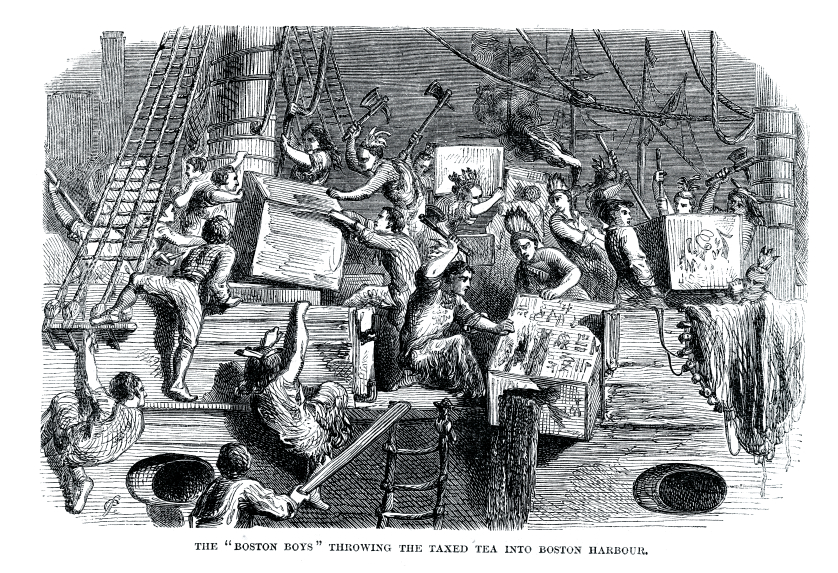
They call themselves the Tea Party patriots, apparently seeing themselves in the tradition of the American colonists who resisted Parliament’s Tea Act tax in 1773 by dumping three boatloads of tea in the Boston Harbor, rather than returning it. The Tea Party’s effort to find a historical connection, however, does not work.
There is no real Tea Party, by any definition of the term “party.” This is merely a label, a colorful (albeit historically-distorted) rebranding of the GOP’s right wing. The Tea Party is really a new amalgamation of radical conservative groups who have been around a long time: evangelical bible-thumpers of the religious right; extreme anti-abortion and anti-women’s-rights groups; those who want guns (if not well-stocked arsenals) in every home and office with annual tithes to the National Rife Association; the sons and daughters, as well as a few grandchildren, of the John Birch Society loonies (who knew all along that Dwight Eisenhower was a communist); people who oppose any inter-marriage of races, and, God forbid, same-sex marriages between those they see as perverts; groups who would end the separation of church and state; and people who get most of their political information from right-wing radio, the Fox News Channel, the editorial pages of the Wall Street Journal, their prayer groups, or a few select right-wing Internet sites. Ironically, few in this movement understand that those who provide the money that is spreading the messages that are manipulating them probably believe them to be fools for following an agenda that is not in their best interests.
The Tea Party movement is an orchestrated undertaking that is underwritten by big corporate money, with hard-right corporate conservative views. The puppeteers here are pushing a radical agenda to remove, if possible, or significantly weaken, all government influence and regulation in the marketplace. The movement seeks to disrupt the processes, by gaming the system, in order to de-legitimatize government. They believe that, by making government fail, they will ensure that Democrats in general, and Barack Obama in particular, will lose future elections. And the Tea Party backers and supporters utterly despise our first African-American president.
Notwithstanding glib slogans and faux patriotism, the Tea Party thinks that government has only a few responsibilities (most, if not all, of which can be subcontracted out to the private sector), namely: keeping public order, protecting private property; defending the country against foreign enemies; permitting the marketplace to self-regulate; allowing the intelligent and shrewd to prosper while the less gifted, unlucky, or meek fail because we are not all equal; keeping all taxes to the absolute minimum while eliminating all “death taxes” so that wealth can be accumulated by the “job creators,” to be passed on to their progeny—to highlight but a few core principles of their thinking.
Tea Party Followers: Conservatives Without Conscience
The glue that binds these people together is their political conservatism and their authoritarian personalities. I know a lot about these people, having once traveled with them, and then studied why they are what they have become. Unfortunately, they embrace everything that is wrong with contemporary conservatism. They are what I have called “conservatives without conscience.”
The Tea Party movement did not exist when I wrote my book, Conservatives Without Conscience (2006), a study of the influence of authoritarian conservatism on the contemporary Republican Party. My findings were based on over six decades of the testing of authoritarian personalities by social scientists, and on my own personal knowledge of those with such personalities. When undertaking my study, I was fortunate to find a tutor to help me understand this field: Professor Robert Altemeyer, who was then based (he has since retired) at the University of Manitoba in Canada, where he devoted much of his career to studying the authoritarian personality. Bob, whose work has been recognized by no less than the American Academy for the Advancement of Science, not only helped me understand the studies of others, but generously shared his own work with me, as well.
In a large degree, my book was an effort to translate—for those without advanced degrees in the social science or intimate understanding of statistical studies—the remarkable findings about authoritarians, given their predominance in conservative politics. I wanted to explain how they think and operate. In fact, I was surprised that no one had done so before. When my book became a New York Times bestseller, Bob realized that a lot of people were interested in his information and his work, so he published, online and for the general reader, The Authoritarians (making it freely available). Tens upon tens of thousands of people, including professional peers, have now read his online work. While this information is disquieting to conservatives, the revelations of the underlying science cannot be wished away, and will not simply go away. These people are who and what they are because it is their very nature.
In April 2010, Bob turned his attention to the Tea Party, and he has posted a 15-page analysis of his findings online: Comment on the Tea Party Movement. When that Comment is read in conjunction with his book (or mine), I believe that it will explain more about the Tea Party than the Tea Party knows about itself. Having watched the unfolding debt-ceiling debate, I now believe that I should have written on this topic earlier, and sent others to Bob’s site, for this information could give those dealing with the Tea Party on the debt ceiling a better understanding of the nature of the people with whom they are dealing.
Simply stated, Tea Party followers are the very personification of conservatives without conscience, very typical authoritarians. This is not to say that they are sociopaths or psychopaths, for they are not. Their authoritarian dispositions are neither good nor bad, but, frankly, I do not think these people are well suited for the politics of a democracy. Authoritarians make great soldiers and sailors, police officers and prison guards; they can be good CEOs and great NFL coaches. But they are about as adept at democratic politics as bulls are in china shops.
Understanding Undemocratic Authoritarians
Bob Altemeyer explained in his Comment on the Tea Party Movement that he was “amazed” by what he discovered in the Tea Party movement: “It seemed as if [the Tea Party followers] had read the [social science] research findings on authoritarianism and then said, ‘Let’s go out and prove all those things are true.’ Whatever else the Tea Party movement has accomplished, it has certainly made the research [by social scientists] on authoritarianism look good.”
Authoritarians can be divided into leaders and followers. Because there are more followers than leaders, much of the research has focused on them. Although Bob Altemeyer has done a good bit of work on authoritarian leaders, his observations on the Tea Party address the followers. (Tea Party leaders like Mark Meckler, co-founder of the Tea Party Patriots, and Congresswoman Michelle Bachman, like all authoritarian leaders, raise a host of additional issues.)
Allow me to summarize Bob Altemeyer’s core findings. For purposes of illustration, he highlighted a dozen conspicuous authoritarian traits in the Tea Party: (1) they are more submissive than most to their leaders, and they take direction without question; (2) they are easily frightened and their leaders keep them that way; (3) they wear their self-righteousness on their sleeves, e.g., with their assertion that they are “the true Americans;” (4) they are highly aggressive, so they lash out at those with whom they do not agree; (5) critical thinking and logic escapes them, and they rely upon simplistic slogans to answer complex questions; (6) they inflate problems, and they find an endless supply of our “biggest problems”; (7) they hold conflicting and contradictory beliefs, which does not trouble them, because their thinking is compartmentalized; (8) double standards are totally acceptable to them, so they can be highly critical of others who do exactly what they do, or have done; (9) they feel empowered when in groups, and gain strength by remaining together with like-minded others; (10) they are highly dogmatic, since they do not know why they believe what they do, and they do not question themselves; (11) they are ethnocentric and constantly judge others and events from an “us versus them” point of view; and (12) they are prejudiced, and often racist, although some do not realize it or believe it when confronted.
The Tea Party followers Bob portrayed in April 2010 have changed little since his report; rather, they have only further confirmed his findings. His comments are not his personal observations of these people, rather Bob is merely reporting what countless thousands of authoritarians have said about themselves when tested, and then noting how conspicuous the traits are with Tea Party followers.
As I mentioned above, authoritarians do not do well in a democracy. If you have any doubt, just look at how the Tea Party has handled the issue of the debt ceiling. Rest assured that they are looking for additional opportunities to game our system, which is not designed for people who are unwilling to compromise for the greater good. And watch their reactions when they realize that the overwhelming majority of Americans simply does not wish to proceed as they insist. Hopefully, this rebranded radical contingent of the right-wing, the Tea Party, will not totally destroy the country before our voters realize these people do not belong in a deliberative government like America’s.
 John W. Dean, a Justia columnist, is a former counsel to the president.
