USuncutMN says: Tax the corporations! Tax the rich! Stop the cuts, fight for social justice for all. Standing in solidarity with http://www.usuncut.org/ and other Uncutters worldwide. FIGHT for a Foreclosure Moratorium! Foreclosure = homelessness. Resist the American Legislative Exchange Council, Grover Norquist and Citizen's United. #Austerity for the wheeler dealers, NOT the people.


We Are The 99% event

USuncutMN supports #occupyWallStreet, #occupyDC, the XL Pipeline resistance Yes, We, the People, are going to put democracy in all its forms up front and center. Open mic, diversity, nonviolent tactics .. Social media, economic democracy, repeal Citizen's United, single-payer healthcare, State Bank, Operation Feed the Homeless, anti-racism, homophobia, sexISM, war budgetting, lack of transparency, et al. Once we identify who we are and what we've lost, We can move forward.


Please sign and SHARE

Tuesday, July 24, 2012

American Indian Movement Stands with Foreclosed Anishinabe Homeowner | The UpTake

American Indian Movement Stands with Foreclosed Anishinabe Homeowner | The UpTake


Click on this picture to see Troy's story.

Activist Troy Amlee, a Lakota whose native name is White Horse Warrior, responded to a request from Occupy Homes MN to meet with an Anishinabe woman, Anita Reyes-LeRey, whose south Minneapolis home had been foreclosed upon by Woodlands National Bank, even though she thought she had a deal to rent the home and then acquire a new mortgage two years later. Reyes-LeRey was four minutes late in calling the bank to finalize the agreement, and the deal was cancelled.

Amlee is a member of the American Indian Movement (AIM). AIM was involved last year with the Occupy movement, but had ceased until he skateboarded to Reyes-LeRey’s home. “So now I’m thinking that this could mend the threads that have been broken so to speak,” he said.

Four-Minute Late Phone Call to Bank Could Cost Anita Her Home | The UpTake

Click on Anita's Picture to See Video.

Video by Bill Sorem, Text by Jacob Wheeler

Anita Reyes-LeRey’s phone call to the Vice President at Woodlands National Bank, was four minutes late, and as a result, the Native American might lose the south Minneapolis home for which she and the Occupy Homes MN movement have fought.

Reyes-LeRey has owned her home for 17 years and has $50,000 in equity. She endured a series of financial and health setbacks when her job hours were cut and vertigo prevented her from making the 100 mile, one-way drive to work, prompting her to fall behind on her mortgage payments. Anita tried to negotiate a new mortgage with Woodlands National Bank in Onamia, Minn., which holds the mortgage, but was unable to do so.

Woodland’s National Bank Vice President Cindy Koonce, told Reyes-LeRey that she would do everything she could to help the homeowner. Minnesota Attorney General Lori Swanson offered to look over Reyes-LeRey’s loan documents for the bank. She returned to work and earned more than enough to afford her mortgage. But to Reyes-LeRey’s shock, on the end date of her redemption period, Koonce called and told her she needed to leave her home.


With the help of Occupy Homes MN, Reyes-LeRey began building a public pressure campaign, including call-ins and a petition for Woodlands National Bank to renegotiate her mortgage and keep her in her home. The bank tentatively offered to rent her the home and, after two years, prepare a new mortgage so she could buy it back. The deal required an up-front $2,100 payment — an amount that Reyes-LeRey was uncertain she could raise the money but nevertheless did. But her phone call was four minutes after noon, and Koonce told her the deal was off.

A video from Occupy Homes MN shows a bank official confirming the deal was off because Reyes-LeRey called in “after noon.”

This discussion begins at 4:02 on the above video:
Occupy Homes MN Cameraman Ben Egerman: So can we just note that yesterday we were told by Cindy Koonce, that at 12 (noon) today we would meet with her or talk to her…
Minneapolis Branch Manager Joanne Whiterabbit: What Woodlands bank was negotiating with Anita to do was to allow her to rent her home.
Egerman: Yes and…
Whiterabbit: She needed to let us know by noon today if she had the money that they had discussed for rental purposes…
Egerman: and when did she…
Whiterabbit: the home ownership, the home ownership, that issue is already been done. And that was finalized on April 23rd
Egerman: And when did she call to do that? When did she come to actually do that? It was noon.
Supporter: You needed her to respond to say that she had the money for the deal.
Whiterabbit: Right.
Supporter: And she did.
Egerman: And she did.
Whiterabbit: It was not before noon.
Egerman: When was it?
Whiterabbit: Pardon?
Egerman: When was it?
Whiterabbit: I’m not sure of the exact time. I just heard from Cindy that it was after noon.
Egerman: It was 12:04
Supporter: It was 12:04 when she called.
Whiterabbit: OK
Egerman: So do you think that’s a legitimate thing to say that 12:04 is too far after?
Whiterabbit: It’s not my call to say whether it’s legitimate or not. But the agreement that you had was that it would be done by noon.
Supporter: Why wouldn’t you do a new agreement then?
Whiterabbit: It, it… we’re done.
Egerman: So you’re not going to help?
Supporter: We’re just starting.
Whiterabbit: OK that’s fine. But I just want to acknowledge Anita that I’ve been here for you and worked with you and helped you and I have tried to help you keep your home. And this is not the first time you’ve been in this situation.


While the eviction notice has been put on hold, it could be enabled at any time by the Woodlands Bank. Instead of relenting, Reyes-LeRey has stopped packing as she waits in hope that a solution can be reached.

Contacted by The UpTake, Koonce at Woodlands National Bank said she she couldn’t comment at this time.

Reyes-LeRey says that if she is able to keep her home, she will offer a free room for at least a year to someone who is willing to help people stay in their homes and fight foreclosure. “I just want them to have that time and that energy to be used towards something that’s meaningful.” 

Related Links:
Change.org petition to Woodlands Vice President Cindy Koonce: Negotiate with Anita Reyes to stop her foreclosure

American Indian Movement supports Reyes-LeRey in her foreclosure fight

Why do the police protect the Bank$ter$?

FOR YOU TO UNDERSTAND THIS MISUSE OF POLICE ON THE BEHALF OF FRAUDULENT BANKERS YOU WOULD HAVE TO UNDERSTAND THE DESIGN AND IT'S USE AGAINST ALL UNITED STATES CITIZENS REGARDLESS OF BANK OR LENDER.
IT'S A LOAN TO OWN SCHEME SOLD TO OVER 100 BANKS FOR WHICH YOU ARE MADE POWERLESS IN FINDING LAWYERS OR DOING PRO SE ACTIONS BECAUSE JUDGES ARE ALSO USED BY THEM IN THESE SCHEMES. 
For GOD Sakes!.. Make sure that Bank is safe from those Savages!..

Government and Corporations have united against the people...  WELCOME to the modern day feudal system, the knights are protecting their lord.

Protest demands drop the charges against anti-foreclosure activists | Fight Back!

Protest demands drop the charges against anti-foreclosure activists | Fight Back!

14 face ‘riot’ charges 
 
By Staff |
July 24, 2012
 
Read more articles in
Rachel Lang of the National Lawyers Guild speaking at City Hall protest
Rachel Lang of the National Lawyers 
Guild speaking at City Hall protest 
(Fight Back! News/Staff) 
 
Minneapolis, MN – More than 50 people rallied inside City Hall here, July 24 to demand all charges be dropped against members and supporters of Occupy Homes who were arrested defending the Cruz family home. In recent weeks, city prosecutors added the charge of third degree riot - a gross misdemeanor which carries a sentence of up to one year in prison and a $3000 fine - to the original trespassing charge. The 14 were arrested May 30 in a peaceful protest at the Cruz family home.

Speaking in City Hall, Rachel Lang of the National Lawyers Guild announced the start of a campaign to press city officials to drop the charges. Other speakers included hip-hop artist Brother Ali, Michael Friedman of the Legal Rights Center and Dave Bicking, formerly of the Minneapolis Civilian Police Review Authority.

The decision of city officials to escalate the charges against anti-foreclosure protesters is an attempt to attempt to intimidate activists. The protests organized by Occupy Homes have garnered international media coverage and has been successful in saving the homes of those hit by foreclosures.

Other demands put forward at the protest were that, “All police, including Chief Dolan, who used violence against peaceful protesters be formally disciplined,” and that “no more public resources be used to help banks evict our neighbors.”

Monday, July 23, 2012

Say NO to political prosecution of anti-foreclosure protesters! « MN Coalition for a People's Bailout

Say NO to political prosecution of anti-foreclosure protesters! « MN Coalition for a People's Bailout

 We need to stand up for the right to protest!

CALL…Mayor R.T. Rybak at 612-673-2100,
Assistant City Attorney Mary Ellen Heng at 612-673-2270
City Attorney Susan Segal at 612-673-3272
  • Ask them why Occupy protesters are facing unusually harsh charges.
  • Demand that they drop ALL CHARGES on anti-foreclosure protesters

On October 20, 2011, hundreds of people participated in a demonstration in front of U.S. Bank in downtown Minneapolis to draw attention to the fact that over 25,000 Minnesotans lost their homes to foreclosure in 2010 alone. 7 people were arrested in the intersection in front of the bank and charged with “interfering with pedestrian and vehicular traffic.”

Four of them are scheduled to go to trial on July 30th, but on July 20th they had 3 more charges added (unlawful assembly, public nuisance and not complying with a “peace officer”)!

Nationally, the Occupy movement is facing increasing police brutality, police infiltration, and trumped up charges. Locally the Minneapolis city attorney’s office has decided to try to shut down the growing movement of people standing in solidarity with families struggling to save their homes from foreclosure by giving protesters outrageous charges. For example, the city prosecutors have escalated charges on the 14 protesters who defended the Cruz family home on May 30th. Prosecutors at the City Attorney’s office originally charged supporters with trespassing, but have now moved to significantly more serious charges including 3rd degree riot – a gross misdemeanor which carries a sentence of up to one year in prison and a $3,000 fine.

The city of Minneapolis is trying to scare people from standing in solidarity with people being thrown out of their own homes. 

Solidarity is not a crime! 

Don’t jail the movement, jail the bankers! 

We, the People’s Bailout Coalition, know from our work defending the homes of Rosemary Williams and Leslie Parks that it is essential to our movement for people to be able to protest home foreclosures. The foreclosure crisis is a central issue in the U.S. economic crisis – we cannot be scared away from this important issue and from the tactic of civil disobedience!

Wednesday, July 11, 2012

Woman Almost Evicted By Company That Didn’t Own Her Home | The UpTake

Woman Almost Evicted By Company That Didn’t Own Her Home | The UpTake

Connie Gretsch In front of her Minneapolis home-photo courtesy Occupy Homes MN
Video by Bill Sorem, text by Mike McIntee
Minneapolis resident Connie Gretsch was bracing to be evicted from her longtime Minneapolis home.
Gretsch Eviction Timeline
“I had this plan that when they came to take me out of my house that I was going to chain myself to my washer and dryer,” said Gretsch. “And when they would take me away I’d ask them to put the load in the dryer for me.”
Gretsch then laughed at the thought. She could laugh now, because she had discovered the company trying to evict her had no right to do so. Pacifica didn’t own the mortgage on her home.
Hennepin County property tax records show the company hadn’t owned the home since at least May 15 and may have sold the home as early as February (see timeline at right.) Yet lawyers for the company signed documents on June 14, nearly a month after title on the home had changed hands, swearing to the court that the company still owned the home.
The gaffe, once discovered, may have led to the quick dismissal of eviction proceedings against Gretsch. But the case opens a whole host of questions about how foreclosure and eviction cases are handled as well as the incentives some companies have to ignore government rules and foreclose anyhow.
Lenders slow to negotiate as homeowner racks up thousands in late fees.
A lawyer for Pacifica swear it owns Gretsch's House. Turns out it doesn't.
Gretsch bought her home about 17 years ago. She refinanced in in 2006 but then lost her job in 2009. At the time, Citimortgage serviced her mortgage.
Court records show Citimortgage granted her a loan extension agreement, which lowered her monthly payments to $615 a month and put the amount she still owed back into the loan.
However, as part of the 2008 bailout of the banks, the federal government requires financial companies to modify qualified unemployed homeowners mortgages to an even lower monthly payment than Gretsch had agreed to. In April 2010, Citimortgage told Gretsch she had been accepted into the program and her monthly payments would now be $300.
Unfortunately, Gretsch said she now owed an additional $30,000 dollars on the mortgage in back payments and late fees.
Mortgage sale to Pacifica complicates matters
According to a class action lawsuit, what happened to Connie Gretsch next may have violated multiple provisions of the federal Frank-Dodd Act that’s designed to protect homeowners… including a provision that prevents mortgage companies from foreclosing on a home while the borrower is being considered for mortgage assistance.
“I paid one month and they sold the loan to another company (Pacifica),” Gretsch said. “(Citimortgage) did not send any of the records and told them (Pacifica) that I had not paid anything for a year.”
Pacifica entered into a contract with Acqura Loan Services to collect the monthly payments and process the paperwork on the mortgage.
Hennepin County Tax Record- Gretsch Home
Property Tax Records Show Citibank, Not Pacifica, Owns the Gretsch Home
Court records say Acqura notified Gretsch it would no longer accept her payments, which Gretsch’s attorneys say “artificially and illegally caused a purported default” which they say is a violation of federal law.
Gretsch says Aquira moved to foreclose on her home instead of working with her to modify the loan as required by the federal Frank-Dodd Act. She made repeated requests for mortgage assistance to Acqura, but she says all of them were ignored or denied without notice or explanation…which is also a violation of federal law, according to her attorneys. A lawsuit filed by Gretsch says Acqura has offered no written explanation for its conduct.
Foreclosed and ready to quit
Her home was sold at Sheriff’s auction in November 2011. She says Pacifica tacked about $100,000 on to the original mortgage of $240,000 and then bought the home from itself.
“I felt that I had lost my fight. And I started looking at other places to live. My credit rating was so terrible, I couldn’t find a place to rent,” said Gretsch.
“One day I was packing and I just decided I wasn’t going to leave. And I went to the Occupy Homes meeting at the Cruz’ house on Cedar.”
It was there she found encouragement to fight back. Other foreclosed homeowners convinced her she shouldn’t be embarrassed by her situation. She used that encouragement to contact the Minnesota Attorney General’s office about Acqura’s actions.
Minnesota Attorney General’s office to the rescue
The Attorney General’s office seemed to agree with Gretsch that Acqura had not followed the rules and told mortgage owner Pacifica that in a letter. “Acqura Loan Servicing failed to respond in a proper manner to Ms. Gretsch’s request,” wrote William Gosinger, who works in the Attorney General’s consumer services division. “Ms. Gretsch now requests Pacifica Mortgage halt all foreclosure action and provide a mutually acceptable option allowing her to remain in her property.”
It was about this time that Gretsch discovered that Pacifica no longer owned the home and could not evict her. Pacifica had sold the mortgage to Citibank at least a month earlier. Two days after the Attorney General’s office sent the letter, Pacifica asked the court to dismiss the eviction proceedings against Gretsch.
It’s unclear if Pacifica asked for dismissal because of the letter or because it no longer owned the loan. Pacifica’s lawyers would not answer those questions without speaking to their clients and have yet to call The UpTake back with an explanation.
Birdhouse
For saving her home, Connie Gretsch is sending a birdhouse to the MN Attorney General's office
A broken system “It just only proves that this is not being dealt with properly. I don’t think anybody’s is being dealt with properly,” says Gretsch.
“It’s ruined people’s lives. And nobody has backed up and said we’re going to do it any differently. Gone are the days where you know your banker and you have to face the people that you do business with.”
The foreclosure business is impersonal. Gretsch recalled talking to the person who served her with an eviction notice. “I asked the server why he even does this and he says, ‘well, I have to make my money and last week I delivered one to my sister.’”
Gretsch is giving the Attorney General’s office credit for keeping her in her home. She has a small birdhouse she plans to give the office as thanks for their help.
But while the immediate threat to evict Gretsch from her home may be gone, she still has to negotiate with Citibank to either modify or give her a new mortgage on her home. Tax records say its market value is $196,000. Pacifica paid $240,000 for it before it sold it to Citibank.
Gretsch is also waiting for a judge to rule on her class action lawsuit that could impact her and as many as 50 to 100 other people who may have been wronged by Acqura, many of them in Hennepin County.
Class action lawsuit alleges loan companies have incentive to game the system
That class action lawsuit says the mortgage system makes it more profitable for third party loan servicers such as Acqura to avoid modification, keeping the mortgage in a “state of default or distress” or pushing the loan toward foreclosure. The lawsuit says that profit the loan servers make by delaying loan modification is more than the $1,000 the federal government pays to have the loan modified. Therefore, there is not enough financial incentive to modify the loan.
The lawsuit says Acqura has illegally ignored or denied loan modification requests from Gretsch and other homeowners facing foreclosure. It also says that Acqura violated federal law by not checking to see if homeowners were eligible for federal assistance before starting to foreclose on them.
Acqura is also accused of violating Minnesota laws that regulate the standards of conduct for loan servicers.
Acqura disputed Gretsch’s claim and tried to have the case moved to a federal court. That move failed and it was heard before Hennepin County Judge Susan Robiner in March. She is expected to rule on Gretsch’s class action suit by July 20.
The human toll
Gretsch is a health care worker. She says the toll foreclosures are taking on people is more than just financial.
“One area that hasn’t been really talked about, and I’m a health care provider, is the emotional and physical stress that is put on people and children. And once I get my feet on the ground and get to a point where I think I have this place saved, I want to develop some health care for people that have been totally brutalized by this system.
“People are killing themselves. And it’s not their fault.”
Links to documents and sources used for this story:


  • Class action lawsuit Gretsch Vs Acqura Filed Jan 2012

  • Letter from Minnesota Attorney General’s office to Pacifica asking it to stop eviction.

  • Letter from Pacifica attorney asking judge to dismiss eviction proceedings against Connie Gretsch

  • Saturday, June 30, 2012

    Moratorium on Foreclosures NOW!

    (1933 vs. 2012) MORATORIUM ON FORECLOSURES NOW!

    By Nick Shillingford
    South Minneapolis Homeowner and member of the Canvassing Sub-Committee of Occupy Homes


    The call for an immediate moratorium (government imposed suspension of activity) on all foreclosures is not a new idea. In fact a moratorium was put in place by the Minnesota legislature to halt foreclosure proceedings in 1933 during the Great Depression. In the mid-west this movement was lead by radical farmers in the Farmers Holiday Association. But ultimately a total of 27 states would enact some form of foreclosure moratorium by the middle of 1934 for both urban and rural home owners. (Wheelock 2008)

    In 1932 it became clear that “sharply falling incomes made it increasingly difficult for farmers to pay the interest and principal on their outstanding debts, but falling property values made it less likely that farmers could sell their properties for more than the outstanding balance on their mortgages. The result was a sharp increase in farm mortgage delinquencies and foreclosures.” (Wheelock 2008)

    Similar to the 1930’s today many families have seen their incomes shrink while dropping property values have put their homes actual market worth well below what they still owe the banks on their mortgage. Unemployment, wage pressures and market pressures are now squeezing families across the country.
    In Minnesota, Iowa, and Wisconsin the Farmers Holiday Association, which was made up of farmer radicals played a leading role in activating the wider community and pressuring the legislature to act. According to a paper by Kim Neilsen presented to the Minnesota Historical society “In the fall of 1933, Konrad K. Solberg, Minnesota’s lieutenant governor, told frustrated Douglas County farmers, ‘If you haven’t got 50 [cents] for the [Farm Holiday] membership, steal one of your mortgaged pigs and sell it!’” (Neilsen 1988) In addition to calling on farmers to join the Farmers Holiday Association he was also telling them to committee an act of non-violent civil disobedience in stealing a mortgaged pig back from the bank.


    Years of movement building accompanied by other direct action had been crucial in bringing about the situation in 1933 that ultimately resulted in the passage of the moratorium bill of that year. One popular direct-action technique that was widespread was the penny auction. “The concept was simple. Farm families gathered in large numbers at a foreclosure sale and quietly but confidently informed any prospective buyers that they were not to bid…When items came up on the auction block, only designated bidders were allowed to speak. Cars, tractors, and livestock were purchased for sums ranging from about 10 cents to 50 cents. At the end of the auction, all the goods were returned to the original owner.” Just the threat of this tactic in some cases was enough to convince the banks to renegotiate with the farm families before the date of the auction came. (Neilsen 1988)

    All the while the Farmers Holiday Association and other farm member organizations were also drafting and publicly speaking about legislation to halt foreclosures all together. It was the pressure on the banks that won gains for individual families but ultimately national public pressure on the politicians that brought about a moratorium in many states. Just days before the Minnesota moratorium was passed in November of 1933 Milo Reno, the original organizer of the Farmers Holiday Association, said “We have been patient and long suffering. We have been made a political football for jingo politicians, who are controlled by the money-lords of Wall Street.” (Neilsen 1988)

    Once again many Americans are now becoming aware of the stranglehold Wall Street and big banks have on our communities. We must seize this opportunity to call for a moratorium on all foreclosures while also making it difficult, if not impossible, for banks and the police to forcefully take us and our neighbors from our homes.

    Homelessness HURTS.  Help us prevent homelessness and fight the corrupt banks .. 
    The link to the 2012 foreclosure petition is on signon.org here.  Please sign!

    An article about how to achieve a foreclosure moratorium in your state is at:
     http://www.opednews.com/articles/State-wide-Foreclosure-Mor-by-Virginia-Simson-120618-544.html

    Friday, June 29, 2012

    Help these Media-Savvy Homeless Occupiers Get to Philly ASAP

    HELP!! TIP CUP PLEA - Our ride to Philly fell through. I am BEGGING for donations to take a plane there. THERE IS A PAYPAL slot on this  www.USuncutMN.blogspot.com site. 

     I need $100 by tomorrow. Someone from Occupy Mpls/Mn needs to BE THERE, collecting info and getting people on The Page about how we are being "picked off" and criminalized. I have the foreclosure moratorium/prevent homelessness presentation to do. Please. Nickels and dimes add up. I need $100 by tomorrow and then I can fly there ... 

    I so wish Ziggy Vouraun could come too. So be generous, we would do a GREAT JOB between live streaming, videoing and putting this all in writing .......  

    Help me get support to prevent homelessness via the foreclosure moratorium, speak about the need for the Financial Transaction Tax/Robin Hood tax anduse the media to exposure this cynical ploy by RT Rybeck!!   Minnesota pioneered the foreclosure moratorium movement back in the Depression; we can so do it again.

    Here you can help by putting in a few keystrokes!  http://signon.org/sign/41-million-reasons-for?source=c.url&r_by=260770.

    Signing the petition will give a kickstart to a national demand, done via each state.

    008RNC Redux! http://www.occupyhomesmn.org/nonviolent-cruz-family-supporters-targeted-with-riot-charges-weeks-after-arrests/ three arrestees at Cruz house charged with third degree Riot gross misdemeanor. 3rd degree riot (gross misdemeanor) / Obstructing legal process / Disorderly conduct / Presence At An Unlawful Assembly / Trespassing. Bankster criminal ops continue unhindered with state, local & federal protection from bullies wearing nice clothes ....


    Occupy Homes protesters charged with rioting


    occupyriot.jpg
    Occupy Homes

    Several Occupy protesters have been charged with rioting for their demonstrations at the Cruz family home.
    Local protester Nick Espinosa, who made a name for himself by dropping pennies on Tom Emmer and glitter-bombing politicians across the county in addition to his work with Occupy Minnesota, was charged yesterday with third-degree riot (a gross misdemeanor), interfering with a peace officer, trespassing, disorderly conduct, and presence at unlawful assembly.

    Espinosa did not return phone calls seeking comment but Occupy Homes released a statement blasting the city attorney for "escalating" charges against the protesters.
    Initially, the protesters at the Cruz family home were charged with simple trespassing.
    "These charges are a clear and disgraceful attempt to suppress the Occupy Homes movement and 'make an example' of anti-foreclosure organizers who were arrested while non-violently protesting an unjust eviction," Occupy's statement read. "City Attorney Susan Segal, appointed by Mayor RT Rybak, has also made it a point to aggressively prosecute other political defendants, including a group arrested while protesting US Bank's foreclosure practices last fall."
    Despite the new charges, Occupy says it will continue its protests.
    "This attempt to silence and stifle anti-foreclosure organizing will not deter us from fighting for our homes, our families, our neighbors, and our futures," Occupy said.
    It is unknown at this time how many other protesters were hit with the new charges. Espinosa is one and the group acknowledges that "at least three arrestees (though likely more)" have been affected.
    Related coverage:
    -- Gary Schiff wants city of Minneapolis to send Cruz home police bill to PNC Bank
    -- Police efforts at now-foreclosed Cruz family home cost taxpayers $42,429
    -- Occupy Homes activist Nick Espinosa helps save his mom's Mpls home from foreclosure
    -- Occupy Homes can't defend Cruz family home from third eviction attempt
    -- Occupy Homes successfully defends foreclosed Mpls home against 4 a.m. eviction raid [PHOTOS]


    Nonviolent Cruz Family Supporters Targeted with Riot Charges Weeks After Arrests


    Minneapolis Police Chief Tim Dolan steps on peaceful protesters outside the Cruz home May 30. Fourteen were arrested that night, and so far at least three have received riot charges.


    Yesterday, several activists with Occupy Homes MN discovered that the City Attorney has decided to escalate charges following their arrests defending the Cruz family home. Prosecutors at the City Attorney’s office originally charged the group of Cruz family supporters with trespassing, and have now moved to significantly more serious charges including 3rd degree riot–a gross misdemeanor which carries a sentence of up to one year in prison and a $3,000 fine.

    These charges are a clear and disgraceful attempt to suppress the Occupy Homes movement and ‘make an example’ of anti-foreclosure organizers who were arrested while non-violently protesting an unjust eviction. City Attorney Susan Segal, appointed by Mayor RT Rybak, has also made it a point to aggressively prosecute other political defendants, including a group arrested while protesting US Bank’s foreclosure practices last fall.

    As of now at least three arrestees (though likely more) are charged with the following:
    • 3rd degree riot (gross misdemeanor)
    • Obstructing legal process
    • Disorderly conduct
    • Presence At An Unlawful Assembly
    • Trespassing
    Instead of prosecuting the criminal fraud of the bankers that crashed our economy, or working to give relief to families devastated by the foreclosure crisis, our tax dollars are being spent to evict families at the banks’ behest, and to intimidate and prosecute neighbors fighting to keep more vacant homes out of their communities.

    The fight to defend the Cruz family from a wrongful and unnecessary eviction has garnered support from hundreds of thousands of supporters around the country with solidarity actions in over a dozen cities, and has sent a message to big banks everywhere that we won’t stand by and let them steal our homes.
    This attempt to silence and stifle anti-foreclosure organizing will not deter us from fighting for our homes, our families, our neighbors, and our futures.

    We shall not be moved.

    For more updates and ways to support the defendants, follow www.occupyhomesmn.org, http://www.facebook.com/OccupyHomesMN and www.twitter.com/OccupyHomesMN.
    Please donate to our legal fund here to help cover the costs of this attack on our movement.

    Thanks for your support,
    Occupy Homes MN


    Foreclosure Moratorium Flyer
    Please sign and SHARE


    Sitting on millions of dollars while people are being evicted is unacceptable. Be transparent with the National Mortgage
    Settlement and put a moratorium on foreclosures & evictions until the process is up, running, and proven to be working
    for at least one month.
    There has been at least $280 million available but on hold for over 6 months.  This money was obtained to keep people in their homes and as relief for victims of corrupt banking practices by Bank of America, JP Morgan Chase, Wells Fargo, Citibank, and GMAC/Ally Financial.
    Help us get this money working and stop foreclosures & evictions until it is.  Let’s prevent homelessness  For further information:  Please contact USuncutMN@gmail.com and/or see Virginia Deoccupy Homelessness Simson’s Facebook page.  Petition can be accessed at http://signon.org/sign/41-million-reasons-for?source=c.url&r_byS=260770
    Name        Email                                                                     Comment(s)

    Sunday, June 17, 2012

    Join Vagina is not a Dirty Word FB Group | Speaking of America | Scoop.it

    Join Vagina is not a Dirty Word FB Group | Speaking of America | Scoop.it

    DO IT NOW - I've made this so you can EASILY copy it and paste it around on Facebook. Let's show people vigorous vaginas rule!: COPY, Paste, SHARE WIDELY!!

    Check out the amazing action on the "Vagina is not a dirty word" FB group. The Phoenix IS rising. This is not just a group for *pussies* - it's for the bold and imaginative!

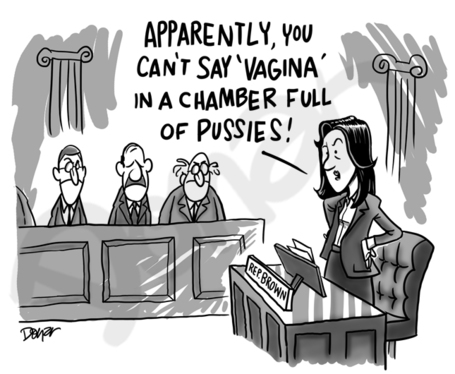
    Since the right-wing rePUGlicans BANNED Representatives using the word(s) Vagina and Vasetomy, we are FIGHTING BACK!!

    Remember my old idea of TONS of mail to stop the war - clog up the DC system? Well in that very spirit, our buddy, Jace Bolger, in Michigan is about to find out what its like to get kotex in the mail.

    #vaginagate rocks!! So do #VaginaMovieTitles #VaginaMovieLines #VaginaBookTitles - which often trend No. 1 right now on twitter.

    Jase Bolger has a FB account. I managed to get 10,000 people last night tweeted telling them to apply to be his FB "friend". That should keep him too busy to insult women for awhile.

    The actions release the pent up 14-year olds in all sorts of progressive women - and guyz, too.
    After all, the Vagina is Not a Dirty Word FB group is not just for pussies!

    Everyone is invited to send Jace a card w/only the word VAGINA on it - and for the lazy, we also have an email to sign via The Daily Kos: http://campaigns.dailykos.com/p/dia/action/public/?action_KEY=161

    Jase Bolger
    Speaker of the House
    PO Box 30014
    Lansing, MI 48909-7514

    But becuz the legislature is in session: this provides where to reach him at home:
    Jase Bolger
    216 W Mansion Street
    Marshall, MI. 49068

    Pass it along! Invite your neighbors, your cats, people who won't be offended, people who WILL be offended - give it your best shot!

    State-wide Foreclosure Moratorium: How to get one!


    Foreclosure Arrestee (USuncutMN) Asks YOUR help

    VIRGINIA DEOCCUPY HOMELESSNESS SIMSON,  www.USuncutMN.blogspot.com, scoop.it/Austerity?NO!!

    Saint Paul, Minnesota  By now, most are aware that the banks made enormous profits selling junk mortgages.  Inside Job won the Best Documentary award for exposing how the citizens were “played” by the banks and how the executives involved just did not hold themselves accountable for the consequences of their massive fraud. 

    Matt Taibbei of Rolling Stone magazine, made powerful comment at Occupy Wall Street on February 23rd in a teach-in as to why we in the United States MUST fight back and demand accountability.  The crisis is far from over. This chart explains why it will take a full four years for the effects to "settle":  It takes time for the entire process to finalize into homelessness!  Let's prevent some trauma!


    Because of activist pressure, a mortgage fraud settlement was obtained. The Bank$ter$ were convicted in The Court of Public Opinion.  Obama was forced to act -- because of We the People.  Try to remember that.

    But many people are not aware that a minimal payout was made available to homeowners via the States after a lawsuit was brought.

    It was an egregious settlement, but it was better than nothing after waiting four long years.

    Where is this money?  Sitting in the bankers’ accounts, collecting interest.  Is this acceptable?  We say NO!  In Minnesota, $280 million dollars has been available for six months, but the program is not working.

     We want and  are petitioning for an immediate foreclosure moratorium.  Here's the link.  Right up front:  I am asking YOU to sign!!  http://signon.org/sign/41-million-reasons-for?source=c.url&r_by=260770

    I write this in hopes you can learn from our Minnesota experience and grow a viable movement in your own communities.  Only through activism, through public pressure will we get justice. With just a little work, we can get foreclosure moratoriums in all our states if we work together.

    What is, Why is and Who are Occupy Homes?

    Journalist/activist Dan Feidt writes from a "think global, act local" vantage point: 

    What is Occupy Homes?  

    Firstly, banks use bookkeeping magic to electronically create money which they lend out to the public & government at compound interest. They don't actually have all that money - only a small fraction. This is called fractional reserve banking. It's intrinsically unstable because the economy can never grow exponentially along with the debt.

    Over the last 15 years the Federal Reserve under Greenspan suppressed the prime interest rate, causing an enormous bubble in home prices. Criminal 'control fraud' organizations such as Freddie Mac committed various crimes such as fraudulent inducement, securities fraud, fraudulent conveyance, etc., to bundle mortgages which were likely to collapse as AAA securities. They got fat bonuses and Freddie Mac used its government backing to basically create insurance for bondholders in the event of default, then resold these securities again. In Nov 2011 FreddieMac was forced to pay the federal govt tens of millions $$ for orchestrating staggering securities fraud at the executive level (bundling Alt-A mortgages as AAA etc)

    In order to create these fraudulent securities, the banks set up a go-between shell organization called MERS, Mortgage Electronic Registration System, which unlawfully poses as the legal entity with authority to foreclose on people for basically any reason, though it usually doesn't have the mortgage note in a valid chain of title. MERS was used to obfuscate any path to ameliorate housing issues, i.e. you could never even reach the responsible party on the phone, if you could determine who they even were.

    Housing prices across the US finally started to crash around 2007-2008. The whole system had been predicated on rising prices which only occurred because the money was magically created thru fractional reserve at suppressed interest rates. As prices fell, thousands of homes had mortgages where the principal demanded exceeded the value of the home - these went 'underwater' as homeowners entered negative equity despite making years of payments. If they quit paying they entered foreclosure, further depressing local prices, a vicious spiral. Today the banks possess millions of empty homes and keep them off the market in order to create the illusion that market prices have stabilized, but in fact price discovery has been halted and 'fake prices' rule the day.

    Don’t say the “F” word or else!

    In the political system 'regulatory capture' has taken over most levels wherein no official with any kind of power, i.e. Sheriff Stanek, Mayor Rybak, are willing to even say the word 'fraud' and defend the public welfare from organizations that orchestrate these crimes & no decisions are taken in favor of the Little People. The housing court in MN does not offer any redress for fraud or in the case of the Cruz house, bank errors wherein the bank demands an unachievable amount of money for their own mistake.

    Therefore a broad network of people have undertaken a direct action campaign to resist the political functions occurring under the regulatory capture such as sheriffs sales and evictions. Through demonstrations and occupying the homes directly, the figures who have the arbitrary power, such as the bookkeeping-magic powered banking industry & the feckless politicians who collect political contributions from the compound interest machine, are forced to let people retain their homes and reduce the principal due on the underwater mortgages, which was never necessary in any sense and was only a lever to consolidate wealth into an ever-smaller group of people.

    That's the theory anyway -- the authorities are willing to carry out extreme levels of state violence to maintain momentum in the regulatory capture & control fraud system which prevails today.

    People who care are forced to join Occupy Homes because:  

    The US federal government sent the Banksters $13T, the entities which created this mess.

    What did the Banksters’ do with their welfare?   It didn’t direct money to solve title problems, it gambled the trillions on more toxic debt around the world.

    Experts such as Ellen Brown urged full redress.  She and others suggested a massive settlement that left the banks feeling the sting -- along with the restructuring of banking itself.  Too Big To Fail meant Too Big To Manage.  The FRAUD was seen as systemic.  Robosigning/liar loans and the scourge of adjustable rate mortgages were to be abolished - whether by regulation or the imposition of State banks.

    Instead, the AGs in the US accepted a bandaid rather than rehab to the heavily-bleeding victims, the taxpayers and shareholders.
    .
    Hopefully - in the name of fairness -  local registrar of deeds and local judges will slap Banksters hard, because elected officials - many owned by Banksters and who could conceivably slap them - haven’t: and logic dictates, won’t.

    And in the urge for fairness, it would seem that banks that participated in fraud should not be collecting interest on the monies paid out for VICTIMS. But they are; that’s how State banking "regulation" is not working these days.  Make a fraudulent attack on the public: Get paid for it.

    So we say that each state should demand a foreclosure moratorium until the allocated money is allocated, and the programs for relief have been proven to work.   

    San Francisco set up a precedent. What We say is that this should go through each state, where the money is, through the Attorney Generals' offices.  So far that has been done only at the local level and to continue that as a strategy would take years.

    To see for yourself who that was done, here is some excellent video on the San Francisco experience provided by Carol Harvey.  A video is worth 1000 words; share her videos with people that care.  

    Learn and then maybe we can get mortgage foreclosure moratoriums in each state, and as we suggest, working through our Attorney Generals.

    Some of us get arrested occupying foreclosured homes, because we think the actions over the last four years are just plain shameful.   I am one of those cases - and I wanted to stand in solidarity with other occupiers.  So I am "guilty" of trespass - with an explanation!   Below is an "explanation" of what I am doing while I await a hearing.

    Here are action steps ACTivists can take. 

    Take this idea and this article to your next Coffee Party gathering.  (We have another one here in Saint Paul on July 7th.)  Take this to moveon.org and your #ows General Assemblies.  Take it to your church.  Take it to your union local.  Take it wherever people w/social justice concerns gather. Some won't hear you, but keep working it.  No one said life doesn't have its struggles.  You may need to remind yourself of that often, but the good responses on a daily basis will keep you buoyed.  We are rocking boats, talking, trusting and building a truly caring movement.

    It is important to remember, that at each step, you need to reach out to more and more people to gather enough people to get a foreclosure moratorium.  If people around you don’t understand what you are doing, just keep doing each step.  Trust me; we're after a winnable action.  More people will begin to support this idea as you go along.  Precedent has been set already!  ; )

    And then devise an action plan that includes the following:
     
    Plan a screening of the following two – Inside Job is available on Dvd, and the Matt Taibbei video is easily accessible on youtube .  (See links above.)  Even a couple of people watching this together can began to have a massive effect on how things go in your state after solidifying their commitment.  There are good homelessness videos coming out now, too.  Tip:  Start a video/youtube collection right away -  in early days.  Get some good photos of homeless persons together too. You may need them later.  Or be bold - go and make a video of your local foreclosure victims and homeless people and then post it on facebook.  Suggest this as a "group activity" for your initial contacts .. Look for and build a community spirit.  Sometimes media committees get a bit ruthless. Cooperation is key to success and this is the time to aim for that.  Include everyone who wants to be included in media efforts.

    Go to www.propublica.com and find out how much money your state has been allocated for foreclosure relief.

    Get an appointment with your Attorney General – and find out the amount the office says is on their books and has not been distributed.  Be prompt and cheerful and loaded with facts and an attitude of compassion for foreclosure victims and homeless people when you go in.  Know that public policy can be changed by YOU – you can make a difference, a very big difference.  It's not a tea party nor an action.  It is an information session at which YOU make a sensible request that will save time, money, social havoc and heartache.

    Ask for them for a foreclosure moratorium! until the money IS released and the program has been proven to work.  Offer to petition citizens showing that the population is on their side if they do that.  Going city to city would take a very long time. 

    Write a petition.  You can use moveon’s site, change.org, care2.org's petition site -- or any other that you’ve already linked up.  You can even post on all available  lists.  Be sure to mention the amount and give references to it as well as the propublica site.  Include a person’s email to return the names of signatories.  You don’t need addresses, or phone numbers from signatories on many of these, which will expand the base of those who will sign.  But be sure to get email addresses.  Tip:  About out-of-state signatories.  Go for it!  This is grassroots organizing at its finest and friends who will back you and your group up, get them on board! Show that this is truly an international issue.  Just aim for a higher number of signatures than you think you will need so that if their names are "disqualified" you have plenty.  Let this snowball by spreading it around.  I am so chuffed by my readers who have signed, that it makes my eyes tear over. They do care ...

    Create a FB “cause” – click it around a bit to your friends and good Occupy sites on the web.  Go to Occupy Homes and other sites and post it around.  We call that clicktavism.

    Write an action alert, a 3-paragraph inspirational piece to send out to your occupy websites.  Just be sure to include the petition link, a place to contact and perhaps a reference or two to show you do kinow what you are "speaking" about.

    Make hard copies and 

    Start asking for signatures at food coops, your social justice actions, in ordinary conversation.  Forward your link to all your FB and twitter friends.  Ask them to get involved and figure out ways you can work together.  I’ll be outside our homelessness show here in Saint Paul this Tuesday, clipboard in hand with plenty of pens and maybe a small sign saying “You can help end homelessness.  Please sign my petition.”  You can put flyers up on coffeehouse and coop bulletin boards - just be sure to pick them up or give a place to forward them to - maybe the Attorney General's office directly.

    Think up talking points in advance:  Writing a blurb for your petition to hand out to those that sign will help you focus your thoughts. Points such as this are incredibly helpful: 
    1. Foreclosure causes BLIGHT – it brings in crackhouses, whore houses, boarded up windows, rodents  – and

    3. Homelessness hurts.  You might mention that for every homeless person, there are 24 empty houses now (Yikes!) One in seven people is homeless.  Here in MN, the average of a homeless person is .. wait for it! .. six years old!  One in four homeless persons is a veteran.  BREAK those stereotypes!  Most of the homeless are children. People who are homeless are not easy to “deal with”. They are wounded and hurt - and often desperately poor. Sometimes, things get so bad, you really cannot predict what an ill homeless person will do and they become scary.  That doesn’t mean that we, as humane persons don’t do everything we can possibly do to help them.  Remember we are asking for monies and programs for people who were victims of FRAUD. The kids didn't sign .. The best way to stop homelessness is to prevent it. That is what we are doing w/this foreclosure moratorium campaign; trying to prevent it.

    4. You might also mention that those of us who fight back and try to get the media to write about the outrage get arrested, but the fraudulent bank$ter$ do not.  In fact, the media and policos lionize bank$ter$ – turning them into rock star status.  Here we see Jamie Dimon of JPMorgan Chase wearing Presidential cufflinks.  After four long years, we are seeing precious little accountability for banksters' FRAUD.  Here is the article about the foreclosure victims arrests. 
    5.  Our media and CONgress are not acting in the public’s interest, but this is a preliminary step in gaining accountability and helping victims for now .. you get the idea.  Only our pressure can change public policy. This is why the settlement was achieved. Public pressure.
    6. Have people go to www.propublica.com for information if you are asked for verification. That’s so easy!

    7. Stay current on issues so you have plenty to talk about.  Obviously, the foreclosure moratorium is just a bit of the solution to our corrupt and highly unregulated banking system.  The articles abound and it can be very difficult to know which to read, which to omit – but struggle on nevertheless.  Find a good author in “the know” and subscribe!  You can run a google alert and get regular, fresh information by the buckets.  Just put in “foreclosure”, “activism” or whatever strikes your fancy, and it will lead you to good, fresh and in-depth articles.  www.webofdebt.com and www.dandelionsalad.wordpress.com are two of my very favorite websites with economics about foreclosure.  So is www.nakedcapitalism.com.  There is also econtv.com for those who want punchy videos.

    Give a donation – food, money, office help, your bodily presence – to a foreclosure occupation. Talk to the people, attend the barbeques, speak to your minister about hosting a teach-in on homelessness, the foreclosure crisis, about ACTivism.  Go visit a homeless shelter; see first hand how demoralizing the environments are that your tax dollars are paying for.  Get angry that homeless children are fed bad food, denied educational opportunities most take for granted and wonder where they will sleep that night. Thank those who volunteer their time in the most needed activity: helping the homeless.  The best "gift" you ever give anyone is your time as you can never get it back.

    Understand me – I am on the side of COMPASSION.  No one should be made homeless.  Housing IS a human right; so is our personal property. So is the right to expect our governments to take our concerns seriously. Rhode Island has a Homeless Bill of Rights now..  An era of #austerity is being proposed. We need to work to ensure we don't have more unhoused, demoralized people.

    Remember: this is a political struggle.

    Over the months I have been fighting foreclosure, I have seen a most disturbing criminalization of dissent.
      – an overmilitarization of police and private security forces Say FRAUD loud and clearly. This is not a handout.  This was a decision made to quell opposition that was getting loud as President Obama and the other politicos tried to sweep our legitimate anger under the rug.  Banks got bailed out; we got sold out - to the tune of $17 trillion dollars.  We are not criminals; we are people striving for justice.

    Our foreclosure fighters at occupations are beaten and sexually abused, denied medications, fed drugs by police (the DRE program), their belongings tossed into dumpsters (illegal!) - and the bail amounts continue to escalate. 

    It is easy to stay wound up and lose focus.  This is not an effort to “get arrested” nor rant about “state power” the entire time.  We need a good, firm CENTER, a mass of support to win even basic justice.  Civil disobedience is a personal choice. 

    But a petition drive – backed up by phone calls, oped letters, national actions - can help us drive up the necessary numbers to build a movement to stop foreclosure once and for all.

    Write opeds, post comments – even to the teensiest of local papers. Educate, agitate, ORGANIZE.   Offer your email address as a contact point. People will show interest, but they need direction.
    We are getting precious little Good Press.  Try to find a media outlet that will explain WHY Occupy Homes exists.  Therefore: When a paper posts articles, post comments.  Say clearly - "This has all been about fraud and we must not blame the victims nor their supporters."

    Continue to educate yourself.  Example:  look at how companies are enriching themselves buying up HUGE lots of foreclosed properties, getting city permissions. Know that without our ACTION, nothing is going to change and more misery is the inevitable result.

    Notes about the foreclosures and homelessness – TRAUMA and our priorities

    Many of us foreclosure activists are homeless.  For me, this time, it was huge overdraft charges on an account for which I had never signed for an overdraft. I’ve been homeless nine months.  But TCF Bank got $100’s in overdraft charges on a $1.88 overdraft because I had direct deposit on my disability check.  They ruined my credit –and after nine months, have never even sent me a bank statement saying how much they CLAIM I still owe. 

    I was a  holder of a mortgage in Ontario and lost my house way back in 2006, They wouldn’t pay up when my husband got ill, even though I had insurance.   I had paid $46,000+ in CASH, and didn’t even get eight months of residency.  I lost $25,000 on the sale of the house besides.  I was framed.  Now I have moved more times than I care to remember.  It just never seems to stop.

    I am 63, disabled, widowed and orphaned.  This homelessness hurts!  In these nine months, not one of three counties have helped me.  The indignities I suffer would make for an entire book.  Too many places to stay has made me even more traumatized; the doctor(s) say so.  I stay sane by … you guessed it!  … fighting back. 

    Articulation of our pain should be taken seriously - particularly the pain of homeless children.  We must speak up for those who are inarticulate, invisible, disabled, too young to speak for themselves.  Advocacy is a talent and a gift when it comes to these issues, particularly right now as right-wingers point fingers at victims.  One more time:  the bulk of the homeless are children.  We are speaking for them.

     Many frontline poverty workers are not helping out in ways that work, although they see the consequences of destroyed urban areas – and increasingly the devastation growing in the suburbs.  Make sure you see that empowerment of ourselves is paramount.  Suffering needs to be listened to and then acted upon.  Don’t further victimize the homeless.  Listen with three ears open.  And _just _stay _active _yourself.
    Don’t join the chorus that’s been set in motion:  Victims are NOT to blame
    Homeless people are deeply traumatized.  And foreclosure victims’ wounds are close to the surface. They are grieving people.  Each day is a trial.  Try to help them; not judge.  You wouldn’t want to be walking in their shoes.

    Yet they are more traumatized as their efforts to empower themselves are met with scorn, derision, brutality, and harassment on the part of City Councils, cops and media. I could give a hundred more links of this part of the "story.".  Cops are not living in foreclosed communities in the cities. City Council members are taking money from banks and corporations to win elections; many are not standing with the tax-paying citizens who are fed up.  Don't allow the coverup!
    Meanwhile, the foreclosure relief money continues to sit in accounts, not being used, unless We make something about public policy change.  Public policy should not be made in backrooms, bars and restaurants by bank$ter$ and politicians sharing drinks and lobster.  Our mayor actually locked his door, but continues to meet with those who want to subsidize a nearly $1 billion stadium!  But, doubtless our din gets on his nerves and we continue to say:  We will be back!

    We can win this!  We can “like” it.  We can “tweet” it.  We can “share” it. We will win with your own particular, special help involved.  You cannot stop the power of a Great Idea.

    I can be reached at USuncutMN@gmail.com.  Tell me how your Action Plan proceeds. 

    This is permanently archived at: http://bit.ly/MXjPP1

    Our Minnesota petition can be found here:  Please! Sign it!  Use it as a template for your State.  Many blessings as you help prevent more homelessness - and stand w/the afflicted.


    Friday, June 15, 2012

    Save the Troy Library "Adventures In Reverse Psychology"


    The city of Troy, Michigan was facing a budget shortfall, and was considering closing the Troy Public Library for lack of funds. Even though the necessary revenues could be raised through a miniscule tax increase, powerful anti-tax groups in the area were organized against it. A vote was scheduled amongst the city's residents, to shut the library or accept the tax increase, and Leo Burnett Detroit decided to support the library by creating a reverse psychology campaign. Yard signs began appearing that read: "Vote to Close Troy Library on August 2nd - Book Burning Party on August 5th." No one wants to be a part of a town that burns books, and the outraged citizens of Troy pushed back against the "idiotic book burners" and ultimately supported the tax increase, thus ensuring the library's survival.

    Monday, June 11, 2012

    Citizens United and "the Montana model"

    A considered response to the Supreme Court decision


    June, 2012 


       _________________________________________________________________


    Super PACs have arrived this election season and whatever your political point of view 

    you will be targeted. Hundreds of millions of dollars, mostly to be spent via negative 

    advertising, will be parlayed by Super PACs.  These new entities, as a result of the 

    Supreme Court’s Citizen United decision, legally raise and spend unlimited sums of 

    money to advocate for or against candidates. The 2010  Citizens United   ruling  gave 

    corporations and unions the right, under the doctrine that money is speech protected 

    by the First Amendment, to make unlimited independent expenditures in campaigns for 

    elected office. Super PACS are pushing expenditures into the unaccountable mega-

    millions. 


           The consequences have begun to roll out in 2012. The US Supreme Court's 

    historic decision not only struck down a federal statute, 2 U.S.C. § 441b, and decades 

    of ‘settled’ campaign finance law –  overturning two of its own key campaign-finance 

    decisions -- it has also jeopardized 26 states' laws prohibiting or limiting independent 

    corporate expenditures.  This decision establishes protection for a debilitating 

    entrenchment of corruption at all levels of politics.   Citizens United prevents effective 

    campaign finance reform and hence fair and open elections. It ensures the influence of 

    money-in-politics, the escalating power of lobbyists, and and a profound shift in 

    governance against the public's interests. 


           According to many observers, whether conservative, liberal or independent, the 

    consequences of this Supreme Court decision and other similar decisions, 

    undermines the First Amendment and our system of constitutional protections. Instead 

    of “more free speech”, the ruling gives corporations/corporate entities and moneyed 

    interests unprecedented power over political speech. 


           One has only to look at the 2012 primary season within the Republican Party to 

    witness the power of money to influence votes, mount negative attack ad campaigns, 

    buy media time and resultant “eyeballs” and “mind share” (in advertising-speak) and 

    generally monopolize election outcomes.  In the upcoming 2012 general elections 

     Democrats and Republicans alike will display an unprecedented level of negative 

     electioneering, hundreds of millions of dollars spent on orchestrated assaults by a 

     handful of individuals, taking attack ads to a new unprecedented high and public trust 

     in politics to a new low. 


           As the  Citizens United ruling opens a floodgate of money, the public's approval 

    of government  as expressed in polls diminishes to historic levels of mistrust, giving rise 

    to anger and “take back your country” movements, left and right. While the Supreme 

    Court argues among itself, issuing 5 to 4 decisions, public belief in government “of, by 

    and for the people” wavers.  An out-of-balance system grows significantly more quid 

    pro quo and less democratic as a result of Citizens United. 


            What are the possible remedies, solutions, legal approaches to turn the Court 

     away from the untoward direction it has unfortunately chosen to go with  Citizens 

     United?  The future under the sway of Citizens United is not credibility for the Court’s 

     authority but a predictable result – deep citizen discontent after vast, unaccounted-for 

     election spending, a campaign that will rival the worst in American political history. This 

     is inevitable, unless we can turn the Court toward a ruling that would strike a balance 

     for  the greater good. 


            Some activists justify their campaigns against money in politics as useful for 

     “public education” although it is difficult to see  how their strategies could lead to 

     success.  These campaigns exemplify Stanford Professor Richard Thompson Ford's 

     observation that  many of today's political activists don't really expect to get what they're demanding 

     anyway: increasingly, they define their objectives in terms of "community building" and 

     “consciousness raising" -- a sad admission of the futility of their demands.   Rights 

     Gone Wrong: How Law Corrupts the Struggle for Equality (2011) p. 240. 


      Polls show the public already understands money’s corruption of US politics.  Only 

     17% of voters now think government has the consent of the governed while  95% 

     already know what money in politics buys.  What is lacking is not public understanding 

     of the problem but an effective strategy to deal with it.   


            To directly address the Citizens United ruling, there are three reform options 

     supported by the Constitution. Of these, the legal strategy labeled here the “Montana 

     Model”, presented as Option Three, is the most effective near-term approach to 

     reversing Citizens United’s damaging effect on democratic elections. 


                                                  Ω


    Option One:
    The Constitution, Article III, Sec 2, (“the Exceptions Clause”) grants 

    Congress the authority to pass a law stripping the Supreme Court of jurisdiction over 

    cases like Citizens United by ordinary majority vote. By stripping the Court's jurisdiction 

    Congress could restore its own powers to regulate campaign finance. Yet it stretches 

    credulity to envisage Congress employing its Exceptions Clause power, for this 

    purpose,  as this would require a robust congressional strategy in response to the 

    Citizens United decision at the same time those interests unleashed by the decision 

    are injecting unprecedented, unlimited amounts of money into elections. Given 

    business-as-usual, what members of Congress can be expected to put their re-election 

    fund-raising at risk by effectively legislating for electoral integrity? Even those 

    politicians who raise money and votes by supporting reforms are careful to support 

    reforms that are either ineffectual or impossible., or both.  The recent Senate vote on a 

    DISCLOSE bill to force disclosure of secret money in politics showed that this is a 

    strictly partisan issue with Republicans voting in lockstep against any reform, however 

    ineffective the Democrats' proposal may be to actually solve the problem.   This 

    symbolizes the role of the two parties in serving the fraction of 1% who control most of 

    the money in politics.  One party clearly serves their interests, and so does the other 

    while pretending not to


           First, within the prevailing pay-to-play reality, an unpopular Congress has neither 

    motivation nor bi-partisan votes to engage a more popular Supreme Court in a contest 

    over separation of powers by stripping the Court via Article III, Sec. 2 of jurisdiction to 

    hold Congress' campaign finance laws unconstitutional    Second, Congress, with the 

    enabling support of many professional activists, has a history of offering the public 

    piecemeal reforms that do not even attempt to comprehensively address the problem 

    of money in politics.  DISCLOSE is just one example.  But experience shows that in a 

    systematically corrupt political system piecemeal reforms actually do more harm than 

    good.  


    Option Two:
    A Constitutional amendment is another proposed approach. An 

    amendment enacting new constitutional text concerning campaign finance, unlike the 

    simple majority vote required for Option One, would first require approval by a ⅔ 

    supermajority vote of each house of Congress. One asks again, “who believes 

    Congress, as it currently stands, will step up with a ⅔ majority to effectively turn down 

    unlimited campaign money as allowed by Citizens United?” Many of the proposed 

    amendment texts on offer could actually cause more harm than good due to 

    unintended consequences from unpredictable Supreme Court interpretation.  As 

    Steven Colbert's lawyer has said there are serious flaws in 


           talk of a constitutional amendment. Not only would such an amendment be 

           hard to draft, putting the interpretation right back into the hands of the 

           Courts, but I think talk of an amendment encourages avoidance of the 

           hard work that should be done to solve these problems. For there are 

           legislative solutions … 


    And if a more effective text were to somehow pass Congress, notwithstanding the 

    considerations that make Option One implausible, how many more years will it 

    reasonably take for the required 38 states to ratify the text proposed by Congress? 

    Given the political realities and facts on the ground, the amendment approach is an 

    even more problematic strategy than Option One.  


           Look to the Equal Rights Amendment as a salient example of the path a 

    congressional amendment proposal and state ratification campaign would have to 

    take. First introduced in Congress in 1923, four years after the 19th amendment, the 

    ERA was an uncomplicated text that clearly expressed the principle of equality 

    between the sexes.  It nevertheless had a convoluted fifty year history until its approval 

    by Congress in the early '70's, and ultimate failure of ratification in the early 80's. In the 

    midst of the ratification campaign, a Supreme Court decision, Buckley v. Valeo (1976) 

    unleashed a wave of money that fueled opposition to the ERA, blocking three out of 

    the four remaining state ratifications required to reach the requisite thirty eight states  

    Yet, twenty one states adopted versions of the ERA in their state constitutions, which 

    leads us to consider what may be the most effective strategy for dealing with Citizen’s 

    United.  In recognition of the forward-looking citizens and Supreme Court of Montana, 

    this is labeled the “Montana Model.” 


                                                   Ω


    Option Three:
    The Montana Model, a state-based response to  Citizens United. 

    States on their own without requiring consent from Congress possess constitutional 

    authority to regulate both their state and federal elections. The Tenth Amendment of 

    the Constitution secures the states' exclusive power over state elections. Article I, Sec  

    4 provides states the primary responsibility for federal elections (including regulation of 

    campaign contributions, reporting, disclosure, and so on) subject to the oversight of 

    Congress. Congress may choose to exercise that power, for example, via the Federal 

    Election Commission.  A state’s right to regulate or entirely outlaw private interest 

    money in politics is subject only to Congress' objection.  It is politically unlikely that 

    Congress would overtly oppose state law designed to control money in elections, 

    where Congress itself  provides none, because voters are unlikely to tolerate a 

    congressional effort to undermine election integrity.  The Supreme Court is the more 

    likely source of interference in the states’ right to oversee election campaigns. 


            The “Montana Model” advantages from this legal framework and Montana's 

    defense of its laws against corporate expenditures in elections.  Stepping away from 

    the Citizens United decision, the Montana Supreme Court rejected the one-size-fits-all 

    approach of the US Supreme Court that every state must fall within its Court-

    mandated, unlimited corporate spending regime. In their appeal of the Montana 

    decision upholding Montana's law, two Montana corporations have asked the US 

    Supreme Court to apply Citizens United to overturn Montana's election finance anti-

    corruption law, dating back to the era of “Copper Kings”, which outlaws independent 

    corporate electioneering expenditures. The rejection or dismissal of the corporate-

    initiated suit against Montana will have far-reaching consequences


            It is possible that the deciding vote in the Montana case could be cast to refuse 

    to invalidate state election laws in violation of the 11th Amendment of the Constitution  

    If the strategy proposed were  taken up by enough concerned citizens, w the upcoming 

    decision on the Montana case could convert a predictable 5 to 4 vote for  Citizens 

    United to a 4 to 5 vote for Montana.   Montana can win if just one justice in the  Citizens 

    United majority adheres to previously expressed views on 11th Amendment rights

    Without public attention on this case and the justice's hypocrisy if they fail to apply the 

    11th  Amendment, Montana will not likely win.


    The 11th  Amendment bar to the Supreme Court hearing a suit against a state, or 

    officials who act for the state, without its consent should apply in this case, where the 

    plaintiff is neither “sovereign” nor authorized by Congress. Congress may  specifically 

    authorize  lifting the 11th Amendment bar to private suits against a state in order to 

    enforce the Civil War amendments' prohibition of racial and other discrimination.  The 

    executive branch can sue a state on behalf of the sovereign United States in order to 

    enforce any provision of the Constitution or federal law.  But Supreme Court precedent 

    holds that private parties cannot sue a state on matters that implicate core aspects of 

    state sovereignty or that could result in a burden on the state treasury. (E.g. Idaho v  

    Coeur d'Alene Tribe of Idaho.)


            The Supreme Court has developed convoluted and constitutionally unsupported 

    exceptions to 11th   Amendment immunity that it may or may not decide to apply in this 

    case to grant itself the power – which the Constitution withheld -- to hear this case 

    against Montana. If it does so, the Supreme Court will be changing the constitutional 

    text as it did when it read its preferred unrestrained election finance law into the First 

    Amendment. The only express constitutional basis for interfering with state elections 

    are the amendments prohibiting discrimination against any adult citizen on the basis of 

    race (15  ), gender (19  ), payment of a tax (24  ), or age (26  ). 


            The lawsuit appealing the decision of Montana's Supreme Court could, if 

    politically supported with ‘friendly briefs’ from other states, succeed in defending the 

    rights of states to enforce their election, campaign finance and anti-corruption laws 

    going forward. Twenty-two sates did join an amicus brief.  But that brief attempted 

    solely to re-argue Citizens United and did not defend the sates' immunity from private 

    suit over their election integrity laws.  


            Two public interest organization, The Eleventh Amendment Movement and 

    Essential Information did file 11th  Amendment briefs.  This Montana appeal would be 

    the opening initiative in a strategy that could work to preserve the rights of all states in 

    the election campaign and lobbying arena. Montana still has an opportunity to adopt 

    the arguments in these briefs prior to the expected June 14 Supreme Court conference 

    where the case will be decided. 


            This states' rights approach is the best model – the “Montana Model” – to 

    address the flight away from fair elections, campaign integrity and governance that is 

    widely perceived as not “of, by and for the people.”  Victory of the Montana Model is 

    only likely if  the two factions on the Court agree to allow state-based approaches to 

    election finance. 


            The Montana law currently before the Supreme Court can be employed as a 

    ‘template’, a ‘best practices’ model to be considered alongside other states' similar 

    election laws and regulations that prevent unlimited political spending. Together the 

    extensive body of state election laws establishes a model  legal framework for 

    acceptable campaign finance limits. The effort to defend the Montana Model would 

    attract support from across the political spectrum, joining together disparate advocates  

    This effort could mobilize widespread support from those usually more conservative 

    voters who support states rights, joined up with those often more liberal voters more 

    concerned about reducing the influence of money-in-politics. 


            This potential political alliance operates from the level of the Supreme Court, 

    where there are two distinct camps on the separate issues of states' rights and money-

    in-politics, and extends all the way to state legislative bodies and voters. Together the 

    two camps, led by Attorneys General from both camps, could step up to support the 

    rights of states to oversee elections free of a federal judicial mandate, such as the 

    Citizens United decision, ordering one-size-fits-all elections for everyone. 


    Montana presents a challenge to other states to similarly stand up to the Supreme 

    Court. 


           Most all states, given the opportunity, will defend the language, and intent, of the 

    original Constitution to leave most election matters closest to the people, where 

    citizens vote, in their  communities, towns, counties, and states without interference 

    from a Supreme Court unsupported by either of the elected branches of the federal 

    government. 


           The viability of this strategy will be initially decided by the Supreme Court in 

    Western Tradition Partnership v. Attorney General, 363 MT 220 (2011), stayed pending 

    writ of certification sub mom. American Tradition Partnership, Inc. v. Bullock , 565 U.S  

    __ (February 17, 2012 ). Whether the Supreme Court takes on the appeal (i.e., “grants 

    writ of certiorari”), will be determined sometime after June 14th , when the Court's 

    conference is scheduled on the case .  There is potential for an intense spotlight to be 

    thrown on the Supreme Court and its decision. The Court takes a summer vacation just 

    after the case is scheduled to be submitted to it so Its decision whether to hear the 

    case may not come until late June or even as late as the highpoint of the presidential 

    election campaign in October. While the case remains under review, the Court’s 

    Citizens United decision prevents enforcement of Montana's and implicitly other states' 

    similar laws.   


           If the Court declines to take jurisdiction of the case, then Montana's law and 

    similar laws of other states may be enforced.  This would be an initial victory in the 

    battle to establish the states' independence from Supreme Court-mandates that have 

    stripped away both the states' authority and any meaningful Federal Election 

    Commission oversight of elections. 


           If the US Supreme Court grants the corporations' request to take the Montana 

    case on appeal, and then reverses the Montana Supreme Court's decision, the Court 

    will be enforcing  Citizens United in Montana and imposing its dictate so as to invalidate 

    all similar state election laws.  The states' ability to protect the integrity of their 

    elections from unlimited corporate spending would cease.   Reversal of the Montana 

    Supreme Court’s decision would shut down what may be the most politically promising 

    approach available in the near future to provide for fair, more open and democratic 

    elections. 


            Yet, one Supreme Court judge who voted with the majority in  Citizens United 

    could choose to recognize the value of a balance between federal and state power in 

    the conduct of elections.  One justice's support for applying conservative states' rights 

    principles contained in the 11th   Amendment to reject jurisdiction of the Montana case 

    would open up a strategy that is the best, most practical way to render  Citizens United 

    ineffective and strike a balance between state and federal power. 


            A balance can be struck that is eminently constitutional  by focus on the Court's 

    potential one, swing vote and making a coordinated effort in friendly briefs, particularly 

    by AG’s concerned about the protection of their state's legal powers, accompanied by 

    wide-ranging citizen support of fair and democratic elections. Since all elections are 

    conducted at the state level, this “election powers in balance ruling” would serve as a 

    framework for foreclosing the Supreme Court from ‘trumping’ long recognized states’ 

    rights. The Supreme Court can rise to a new level of citizen respect as it moves to 

    balance a tendentious decision in Citizens United with public support from multiple 

    points on the political spectrum. 


            Montana’s defense of its election laws before the Supreme Court should be 

    looked at carefully by all parties – by citizens, elected officials, good government 

    activists, scholars and the news media, by conservatives who believe in state rights 

    and the import of the founder’s intent, and by liberals who hope for a more responsive 

    government.


            The effect of even one judge applying the 11th  Amendment could be more than 

    salutary; it could be profoundly reassuring, reminding all of what is possible in avoiding 

    the deep, negative consequences of drawing hard lines where elections, campaigns 

    and policy decisions are waged with increasingly negative consequences. Open and 

    fair elections are the foundation of a working democracy. Election laws enabling 

    participation by all in debate is vital to a healthy democracy. 


            If the State of Montana’s attempts to provide a regulatory framework for fair, 

    open elections is to stand, and become one state’s model of what is possible state-by-

    state, Montana must assert is sovereign immunity from this suit under the 11th 

    Amendment and adopt the arguments made in the 11th  Amendment briefs at this 

     website expenditure ban -- Mont. Code Ann. 13-35-227, laws that the  Citizens United decision 

    will prevent from being enforced, need to similarly stand on their 10th  and 11th

    Amendment rights to enforce their own laws; states that do not have such laws should 

    follow Montana's example and enact such laws.  The success of efforts to help 

    Montana obtain a favorable Supreme Court decision allowing the law of Montana to 

    stand would have an immediate impact at all levels of politics. In as many as half of the 

    states existing election laws similar to Montana's will be preserved.  With such 

    success, additional states could be encouraged to follow Montana's example and 

    adopt or improve their own election and campaign finance laws. With the federal 

    government – but not the states - remaining hobbled by  Citizens United, it would be 

    clearly up to the states to fight political corruption. Much is possible if the Montana 

    model goes forward. One state at a time, it would be possible to reach the point where 

    a majority in Congress is elected from clean election states. 


    Plan B, “What if?” 


    If the Supreme Court fails to observe the 11th  Amendment  limits on its power in dealing 

    with the Montana appeal, and subsequently rules against the state of Montana, the 

    battle for defending states rights’ to prevent corruption and enforce spending limits in 

    their elections does not end. Congress can be asked to enact legislation under both 

    11th  Amendment and its Article III, Sec 2, “Exceptions Clause” power, such as the 

    following: 


      "Eleventh Amendment Enforcement Act -- 


      a) Except as expressly provided by Act of Congress and the Eleventh Amendment 

      of the United States Constitution, no judge of the Supreme Court or other court of 

      the United States shall, without a state's consent, adjudicate any suit in law or 

      equity, nor rely on any prior judicial decision, involving invalidation or other review 

      of any State or local election finance law, regulation, policy or decision prohibiting 

      or otherwise regulating either a financial contribution to a candidate for, or an 

      expenditure affecting, any election conducted within its state or locality." 


      b) 2 U.S.C. §453(a) is amended by adding to the first sentence "insofar as state 

      regulations are less restrictive than those provided in this Act." 


            With such legislation, Congress would be in the position of resolving a conflict 

    between the rights of states and the Supreme Court rather than initiating a conflict 

    between itself and the Court, as in Option One above. Because Congress would act in 

    defense of states’ rights, it should be able attract some bipartisan conservative support 

    along with the overwhelming support of the majority of voters who want cleaner 

    elections. If this provision were enacted, a phased state-by-state campaign can 

    proceed.   There is no need to delay lobbying for this provision because it would likely 

    also influence the Court toward recognizing states' rights as preferable to being 

    chastised by Congress for failing to do so.


            An appropriate precedent for success  of such a phased strategy can be found in 

    the similar phases of the women’s right-to-vote movement in the US


            The Supreme Court had denied women's right to vote under the Constitution . Yet 

     women won the right to vote at the state level starting with Wyoming    in the 19th 

    century. By the end of the century women were winning the vote in one state at a time 

    until they achieved voting equally with men in a number of states that represented a 

    clear majority of the electoral vote for President.  Women could then “speak truth to 

    power,” by their influence on federal officials on the question of their voting rights.  The 

    women's right-to-vote movement employed a strategy of single-issue voting and state-

    by-state enfranchisement to force the President (Wilson) and Congress after a series 

    of close votes to approve and propose to the states the 19th   amendment. Women 

    voters and their allies then caused ¾ of the states to ratify. The amendment imposed 

    the enfranchisement of women on the remaining recalcitrant states.  Today's 

    enfranchisement struggle to get money out of politics does not require a constitutional 

    amendment because the problem is not recalcitrant states, but rather a recalcitrant 

    Supreme Court.  Only legislation is required to strip the Court of its powers over either 

    federal or state law.  


            Yesterday’s Wyoming can be today’s Montana. The success of the women’s 

    organizing model was the largest enfranchisement campaign in American history. The 

    women’s right-to-vote movement serves as a model for re-enfranchising citizens today  

    Citizens who have been increasingly disenfranchised by Supreme Court decisions 

    establishing the power and undemocratic impact of money in politics can apply the 

    women’s right-to-vote model of state-by-state reform. In achieving full citizenship, the 

    women’s right to vote began with the state of Wyoming. To get money out of politics it 

    can be the “Montana Model” that leads the way toward more inclusive, fairer elections. 


                                                      Ω  Ω  Ω


    Citizens United and the 'Montana Model' 

    References - 
    http://en.wikipedia.org/wiki/Citizens_United_v._Federal_Election_Commission


    In December 2011, the Montana Supreme Court in Western Tradition Partnership, Inc  

    v. Attorney General of Montana upheld that state's law limiting corporate contributions  

    Examining the history of corporate interference in Montana government that led to the 

    Corrupt Practices Law, the majority decided that the state still had a compelling reason 

    to maintain the restrictions. It ruled that these restrictions on speech were narrowly 

    tailored and withstood strict scrutiny and thus did not contradict  Citizens United. Judge 

    James C. Nelson, dissenting, agreed with the majority that  Citizens United was 

    incorrectly decided but argued that Citizens United nonetheless  precluded the Court's 

    decision


    In February 2012, the Supreme Court blocked the Montana Supreme Court's decision 

    pending submission of cert petitions. Justices Ginsburg and Breyer released a short 

    statement, urging the Court to revisit Citizens United and "to consider whether, in light 

    of the huge sums of money currently deployed to buy candidate's allegiance,  Citizens 

    United should continue to hold sway". 


    On May 18, 2012, Montana and its amicus supporters submitted briefs to the Supreme 

    Court, including  two 11th  Amendment briefs  .  On May 28th the corporate petitioners 

    filed a Reply Brief.   The case was then ready for submission to the conference, which 

    could be held as early as June 14, when the Court will deliberate whether to grant the 

    writ of certiorari (agreement to consider the case) and also take up the petitioners' 

    request to summarily dismiss the case without any further briefing or argument as 

    would normally occur


    Unless it denies cert as Montana  requests, the Court would either schedule plenary 

    argument of the appeal in the October 2012 term, or summarily reverses as the 

    corporations request and most commentators expect. 


     Reversing Citizens United /   OEN

     Stare Decisis   after   Citizens United  : When Should Courts Overturn Precedent  / Cato 

    Institute 

     The Hard Truth of  Citizens United  / Salon 

     The Post  Citizens United Fantasy-land  (Problems of disclosure laws) Georgetown Law 

    -

    Cornell Journal of Law & Public Policy 

    Citizen Involvement: 


    √ Contact your members of Congress to  support Montana’s election laws by 

    requesting they 

    √ Support the “Eleventh Amendment Enforcement Act” 


    Never doubt that a small group of thoughtful, committed citizens can change the world.  

    Indeed, it is the only thing that ever has.   ~ Margaret Mead