USuncutMN says: Tax the corporations! Tax the rich! Stop the cuts, fight for social justice for all. Standing in solidarity with http://www.usuncut.org/ and other Uncutters worldwide. FIGHT for a Foreclosure Moratorium! Foreclosure = homelessness. Resist the American Legislative Exchange Council, Grover Norquist and Citizen's United. #Austerity for the wheeler dealers, NOT the people.


We Are The 99% event

USuncutMN supports #occupyWallStreet, #occupyDC, the XL Pipeline resistance Yes, We, the People, are going to put democracy in all its forms up front and center. Open mic, diversity, nonviolent tactics .. Social media, economic democracy, repeal Citizen's United, single-payer healthcare, State Bank, Operation Feed the Homeless, anti-racism, homophobia, sexISM, war budgetting, lack of transparency, et al. Once we identify who we are and what we've lost, We can move forward.


Please sign and SHARE

Showing posts with label Robin Hood tax. Show all posts

Friday, May 18, 2012

RoseAnn DeMoro on the Robin Hood Tax

RoseAnn DeMoro on the Robin Hood Tax | Moyers & Company | BillMoyers.com


RoseAnn DeMoro on the Robin Hood Tax

May 11, 2012
Bill talks to RoseAnn DeMoro, who heads the largest registered nurses union in the country, and will lead a Chicago march protesting economic inequality on May 18. DeMoro is championing the Robin Hood Tax, a small government levy the financial sector would pay on commercial transactions like stocks and bonds. The money generated, which some estimate could be as much as $350 billion annually, could be used for social programs and job creation — ultimately to people who, without a doubt, need it more than the banks do.
DeMoro and her organization, National Nurses United, have an inspiring history of defeating some of the toughest opponents in government and politics.


‎[The National Nurses United protest fires up Daley Plaza. — Zbigniew Bzdak, Chicago Tribune, May 18, 2012]

The first of two major NATO weekend rallies in Chicago is getting under way Friday, May 18 at Daley Plaza as a crowd gather in support of a plan to make Wall Street provide more money for health, education and social service programs.

National Nurses United organizers have said that they expect about 2,000 people to attend the rally, where they will call for a so-called Robin Hood tax in financial institutions' transactions in order to offset cuts in health care and social services. City officials estimate the crowds including Occupy Chicago could swell to nearly three times that group's projected turnout, in part because of a performance by former Rage Against the Machine guitarist Tom Morello, an Occupy activist who has been at the movement's forefront.

For more see: http://www.chicagotribune.com/news/chi-first-nato-weekend-rally-unfolds-at-daley-plaza-20120518,0,1350771.story

Friday, September 23, 2011

Bill Gates backs Robin Hood tax on bank trades


Bill Gates backs Robin Hood tax on bank trades

Miocrosoft founder to tell G20 to back the tax which could raise $48bn a year for aid and development
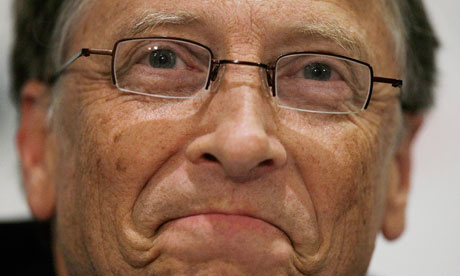
Bill Gates
Bill Gates is to call on the G20 to back the financial trade tax, aka the Robin Hood tax.
Photograph: Jonathan Brady/EPA
Bill Gates is throwing his weight behind French efforts to put a small tax on financial trades as a way of boosting spending on development, finance ministers from the G20 group of developed and developing countries will learn on Friday.
Despite Britain's insistence that such a levy would have to be globally agreed to be workable, draft proposals from the Microsoft founder argue that a tax would be feasible for a group of like-minded countries who decided to go it alone.
Gates was asked by President Nicolas Sarkozy to come up with proposals for new forms of financing for development for this autumn's meeting of the G20 in Cannes. Draft proposals, to be presented to G20 finance ministers in Washington , suggest that Gates has been won over to the idea of a financial transaction tax, which is strongly supported by development charities but opposed by the City.
European sources said the UK had been lobbying hard for Gates to water down his draft report, which says that the tax could raise hundreds of billions of dollars a year and that Britain's stamp duty is an example of a levy on finance that works without the need for universal adoption. "If G20 members or some other set of countries (eg within the EU), can agree on the outlines of a financial transaction tax, Bill's report is likely to argue it could generate substantial revenues," the note to the G20 says."For example, some modelling suggests that even a small tax of 10 basis points on equities and two basis points on bonds would yield about $48bn on a G20-wide basis, or $9bn if confined to larger European economies. Some FTT proposals offer substantially larger estimates, in the $100-250bn range, especially if derivatives are included.
"If a substantial part of the revenues could be allocated to development, this would be a useful addition to resources – and would be additional help to some donor countries to meet their aid commitments in the current environment."
Max Lawson, spokesman for the Robin Hood Tax campaign, said Gates's backing for a transaction tax meant it was "game on". He added: "The Germans and French moving ahead to implement the tax. "George Osborne needs to support this tax and show us he is on the side of the poor and the needy, not the banks and the greedy."

Saturday, June 25, 2011

“America Has the Wealth to End the Despair”

Nurses come face-to-face with the fallout of the financial crisis every day. Now they've joined the worldwide movement for a tax that would curb financial speculation—and help fill public needs.

by 
Robin Hood activist, photo by Jason
Photo by Jason
Sandy Falwell, who has worked in a neonatal intensive care unit for some 20 years, could tell plenty of stories about the impact of the Great Recession on the lives of her patients. One of the most painful: After a woman gave birth to a 2-pound baby, she told Falwell that she blamed herself for her baby’s premature birth. During her pregnancy she had been unable to afford insulin treatments for her diabetes—in part because she was taking care of her elderly parents.
Falwell is a member of National Nurses United, a union whose members come face-to-face with the fallout of the financial crisis every day. On Tuesday, they rallied on Wall Street with the message that “America has the wealth to end the despair and deprivation.”
Rose Ann DeMoro, the union’s executive director, explained:  “There’s a financial transaction fee that we’re going to have Wall Street pay—they’ve paid it here in the past—it’s very American. These yo-yos who buy and sell and buy and sell our country should have to pay a tax on that.”
Such taxes place a small fee on each trade of stocks, derivatives, foreign exchange, and other financial instruments, with the goal of raising massive revenues for public needs while also discouraging reckless speculation.
The United States had a transactions tax from 1914 to 1966, which levied a 0.20 percent tax on all sales or transfers of stock. In 1932, Congress more than doubled the tax to help financial recovery and job creation during the Great Depression.
The nurses’ rally was part of a global day of action during which people in more than 35 countries demanded a tax on financial transactions. The actions were timed for the eve of a meeting of leaders of European Union nations, where the debate over such taxes is much further along than in the United States. There are high hopes that Europe will implement them in the near future, which would give a big boost to U.S. advocates.
Here are a few highlights from other countries, where many of the campaigns have taken on a “Robin Hood” theme:
  • In Berlin, Robin Hoods rolled giant Euro coins down the street to Chancellor Angela Merkel’s residence, where someone who looked an awful lot like her (except with a head four times as large as a normal human) received the money as she prepared to depart for the European Council meeting.
  • In Lebanon, the League of Independent Activists opened opening a banner reading “Big Day for a Tiny Tax” in English and Arabic on the Central Bank before delivering a statement to government officials.
  • In Brussels, activists met with the Belgian Prime Minister Yves Leterme, who assured them that his government will support a Europe-wide transaction tax.
  • In Nepal, activists met with their Deputy Prime Minister and Finance Minister and delivered a lobby letter before taking their message to various historical sites in Kathmandu.
  • In Norway, a casino/stock exchange installation was set up alongside a “Robin Hood forest” in the center of Oslo. 
  • In New Zealand, activists with 350.org and Oxfam did an action at a shopping mall, resulting in this not-to-be-missed short video of a break-dancing Robin Hood.
For more on these actions and continued coverage of the global day of action, click here.
Back on Wall Street, Karen Higgins, a Co-President of National Nurses United told the crowd, “Around the world, we’re calling for a more fair and just economy. The finance tax we’re talking about comes from the trillions of trade of stocks and bonds sold here every day. The revenue is badly needed in our communities.”
The nurses’ union was joined on the street by a long list of other unions and organizations, including the Amalgamated Transit Union, Vocal NY, AFSCME, UNITE HERE Local 100, Community Voices Heard, Transport Workers Union Local 100, United Steam Workers, and PSC-CUNY.
A big theme of the day was that the New York rally was just the beginning of what they're hoping to be a growing movement. Minnesota nurse Jean Ross, clearly angered by the role of the financial industry in creating the current crisis, said, “Wall Street should be happy that we’re just talking about a financial transaction tax. We could be talking about restitution.”

Sarah Anderson and Marlee Blasenheim adapted this article for YES! Magazine, a national, nonprofit media organization that fuses powerful ideas with practical actions. Sarah is director of the Global Economy Project at the Institute for Policy Studies.
Interested?
YES! Magazine encourages you to make free use of this article by taking these easy steps.This work is licensed under a Creative Commons License 

Monday, June 20, 2011

Robin Hood Tax: how far we’ve come, how far we've got to go

http://www.touchstoneblog.org.uk/2011/06/robin-hood-tax-how-far-weve-come-how-far-weve-got-to-go/


19TH JUNE 2011 — FILED UNDER: INTERNATIONAL
Owen TudorOwen Tudor
Some people have very short attention spans. The resurgence of the global left after the Great Depression took a decade and a half (and a world war). The campaign for a UK national minimum wage took at least a dozen years. The Robin Hood Tax campaign has been running for just over a year, and some people wonder why people aren’t paying it yet, or think we’ve lost. So, as the heads of EU governments meet at the end of this week, it’s time to reflect on how far the campaign has come, and how far we’ve still got to go. But make no mistake, this is a campaign that is on its way to victory, if we keep up the pressure.
First, the campaign has been staggeringly successful in several respects – and as my examples suggest, we’ve barely begun in historical terms. When the idea began to surface in 2009 – Adair Turner’s speech in the summer, Gordon Brown’s intervention at the G20 Finance Ministerial in the autumn – it was obviously an old one in some ways: John Maynard Keynes first proposed a transactions tax in 1936 and James Tobin had suggested a currency transactions tax in 1973. But the relatively recent rapid growth of the derivatives market meant that the call for a Financial Transactions Tax was qualitatively new, especially because for the first time it would be not just a market regulator as Keynes and Tobin had proposed, but a major money-spinner. And as the IMF have reported, at least 16 of the G20 economies have had some form of FTT in place over the last decade or two.
The call for a full-blooded FTT – shares, derivatives, currency – was slammed by the IMF, the Financial Times (mostly by omission), and many commentators. Often, the response was that campaigners were well-meaning but naive, or that this was a nice idea, but totally unrealistic. Launching our UK campaign in February 2010 with a Richard Curtis/Bill Nighy videoundoubtedly gave us hundreds of column inches and massive popular appeal, but it did, admittedly, allow people to accuse us of putting form before substance. But that massive popular appeal (250,000 supporters on Facebook, and majority support inpolls across western Europe) was what got us through the front door of the media, governments and international institutions. That, and the support of a growing number of civil society organisations and economists (350 holders of a PhD in economics signed a letter in support a year ago: the latest attracted over 1,000). Even some banks have supported the idea.
Two major multilateral institutions, the IMF and the European Commission, have been converted from slamming the idea as unrealistic to admitting that it is feasible and progressive. Now Bill Gates is working on a report on innovative sources of funding for development for the French G20 Presidency. Governments in the developed economies where the financial transactions primarily take place (and where the tax would therefore be levied) and in the developing and emerging economies which would benefit from spending the income on development aid and tackling climate change, have come out in support. And as concern over speculation has grown, those worried about such things have become more supportive (most recently UNCTAD, who have backed an FTT to tackle commodity speculation, following the leader of UNAIDS last summer). The European Parliament, the French, German and Spanish Parliaments have all recently carried resolutions supporting an FTT. So has Brazil’s, the joint ACP-EU Parliamentary Assembly and Francophone African Finance Ministers. The Governments of Austria, Belgium, Bolivia, Greece, Luxemburg, Slovakia and South Africaare in favour.  At international events on development or climate change (as with the Bonn talks this week) there are always FTT campaigners present, and there will be a third civil society Global Day of Action this week, following up earlier events in May 2010 and February 2011.
Not everyone is convinced, and there are still arguments to be had about how to implement FTTs: such as gradually implementing currency levies, stamp duties on share transactions, and then on derivatives. We still have to convince some people that financial institutions won’t shop around if some countries adopt FTTs unilaterally; that the costs will mostly not be passed on to ordinary people because they will mostly be paid by high net worth individuals; that FTTs will reduce speculation and uncertainty rather than increase it; and even that overseas aid and tackling climate change is possible or desirable. 
But the argument now is really about “how” and “when”. Some people won’t support an FTT until those technical details have been ironed out, while others accept that – as with almost every other tax – those are questions to be determined once the principle has been adopted.
So here’s the timetable. This week at the European Council meeting, heads of government will still be debating both “whether” and “how”, and an FTT probably won’t be on the official agenda. Next week, or in July, the European Commission will publish its impact assessment on FTTs (as well as other banking taxes) and will reveal that FTTs are feasible (as we already know from the IMF study – but as recently as April, diehard opponents in the Commission held sway). As European Union or Eurozone countries move closer to an agreement in principle during the autumn, the  G20 summit in Cannes in November and the COP17 UN climate talks in Durban in December will probably see a coalition of the willing emerge – countries that are willing to start down the path of extending the FTTs that the IMF have already identified as being in place. It will take 2012 and maybe 2013 for those taxes to be introduced, and a couple more years before it becomes clear enough that the sky has not fallen in for other governments to realise either that they now have cover to be brave, or reason to catch up.
By the time the world reaches the deadline for achieving the Millennium Development Goals in 2015, we should – at last – have the means to pay for them in place. I look forward to seeing the Curtis/Nighy video that celebrates that achievement, but I suspect that by then they’ll already be pushing the next great crusade.