USuncutMN says: Tax the corporations! Tax the rich! Stop the cuts, fight for social justice for all. Standing in solidarity with http://www.usuncut.org/ and other Uncutters worldwide. FIGHT for a Foreclosure Moratorium! Foreclosure = homelessness. Resist the American Legislative Exchange Council, Grover Norquist and Citizen's United. #Austerity for the wheeler dealers, NOT the people.


We Are The 99% event

USuncutMN supports #occupyWallStreet, #occupyDC, the XL Pipeline resistance Yes, We, the People, are going to put democracy in all its forms up front and center. Open mic, diversity, nonviolent tactics .. Social media, economic democracy, repeal Citizen's United, single-payer healthcare, State Bank, Operation Feed the Homeless, anti-racism, homophobia, sexISM, war budgetting, lack of transparency, et al. Once we identify who we are and what we've lost, We can move forward.


Please sign and SHARE

Showing posts with label criminalization of dissent. Show all posts

Friday, March 16, 2012

Repost: Response to hacking means losing our FUTURE LEADERS!!

By criminalising online dissent we put democracy in peril 

 The disproportionate response to hacking protests means we are in danger of leaving our future leaders behind bars 

 James Ball guardian.co.uk, Monday 1 August 2011 12.00 EDT
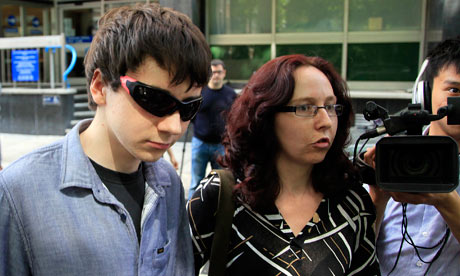
Suspected hacker Jake Davis leaves court after being released on bail
 Suspected hacker Jake Davis leaves City of Westminster Magistrates Court
after being released on bail on Monday. 
Photograph: Stefan Wermuth/Reuters 

 In March this year, more than 150 UK activists were arrested while occupying Fortnum & Mason in a protest against tax avoidance.

 They were held in cells overnight and charged with aggravated trespass. 

Earlier this month, the charges against all but 30 were dropped, as it emerged the chief inspector at the store had given protesters assurances they would be allowed to leave the store unhindered. 

 The incident generated widespread fear about crackdowns on the right to protest, against a backdrop of strikes and protests against government cuts. Similar cries have not occurred in the wake of arrests of individuals allegedly linked to the hacker collectives Anonymous and LulzSec in the UK, United States and Europe. Yet if the criminalisation of dissent is happening anywhere, it is here. 

 The maximum penalty the Fortnum & Mason activists faced for aggravated trespass is three months in prison. Participating in even the simplest of hacking operations is punishable by up to 10 years in prison in the UK, and up to 20 years in the US. 

 Since December, Anonymous and LulzSec have engaged in a series of politically motivated hacks, often in support of WikiLeaks, including attacks taking the Visa and Mastercard websites offline in the wake of the WikiLeaks blockade, a hack on security firm HBGary revealing a proposal to Bank of America to discredit hostile journalists and activists, and attacks against the CIA and the UK's Serious and Organised Crime Agency (Soca). 

 The profile of many of the targets, and the frequency of attacks, may suggest a group consisting solely of master hackers, posing a great risk to the safety of nations. The truth may frequently be rather different.

Eighteen-year-old Jake Davis, alleged by UK police to be Anonymous and LulzSec spokesman Topiary, was on Sunday charged by the Metropolitan police on five counts relating to alleged involvement in attacks on Soca. One related to participating in the denial-of-service attack (a DoS, a group attack designed to take sites offline). Three of the remaining charges relate to conspiracy to engage in such attacks – charges which again carry a 10-year tariff – while the final one is for "encouraging" such crimes to take place. 

Even this encouragement charge carries a maximum penalty equal to the offence involved: 10 years. 

 Davis is one of several individuals recently arrested in the UK. Fourteen more were recently detained in the US – several of whom are suggested to have done little more than run chat channels for the group, or participated in a small way in a few "operations". 

 Engaging in a DoS attack with Anonymous requires no hacking experience or know-how, and little premeditation. Would-be participants were encouraged to download a program called the "Low Orbital Ion Cannon" and follow a series of instructions – while being reassured the "chances are next to zero" of being caught. 

The software created a voluntary version of the "botnets" used by less political hackers to send spam mail or similar using virus-infected PCs. The whole procedure would take someone less than five minutes. 

 A strict interpretation of the law would suggest that even merely encouraging people on Twitter or chat channels to download the software could land hacktivists with up to 10 years in prison. 

 Even engaging in more serious hacking – such as SQL injection, the means believed to have been used by LulzSec to enter News International servers last week – can often be picked up and deployed from simple instructions in a matter of minutes by people with basic computer literacy. 

 The longest sentence so far handed out to UK protesters from the student riots was 16 months in prison for Charlie Gilmour, son of Pink Floyd guitarist David Gilmour.

For one rogue retweet, any Anon could face almost eight times that. Many could walk into such acts with their eyes closed. Anons in Germany, for example, may be aware that in their country, politically motivated DoS attacks are not illegal: following such an attack on Lufthansa in 2001, a judge ruled DoS was equivalent to a sit-in protest and so was in line with German law. 

But for a German, targeting a UK or US company may not be risk free. Not everyone finds Anonymous a sympathetic crowd: some don't agree with its agenda, others its methods, others its attitude. The certainty of young activists is often unsettling – even irritating – to those with more experience of the world. But protest, often outside the realms of the law, is a tradition of politically active youth throughout the ages. 

Anti-apartheid protesters moved outside legal realms, as did those in the civil rights movements, and even those pushing for women's right to vote. 

 Today's Marxist is tomorrow's moderate: more than one member of the last UK government was so active in such movements that the security services kept files on them. Future political leaders are often seasoned through protest and activism. This is naturally moving online. 

The current draconian censorship rules criminalise dissent in this medium. Without reform, when the time comes for a new generation to take the reins, we may find all too many behind bars.

Fox News says: Obama criminalizes dissent. WATCH


URGENT! OBAMA Signs Anti-Protest Bill - FREE SPEECH & Protest will get you JAIL TIME!

The First Amendment to the Constitution prohibits the government from infringing upon the freedom of speech, the freedom of association and the freedom to petition the government for a redress of grievances. Speech is language and other forms of expression; and association and petition connote physical presence in reasonable proximity to those of like mind and to government officials, so as to make your opinions known to them.

The Declaration of Independence recognizes all three freedoms as stemming from our humanity. So, what happens if you can speak freely, but the government officials at whom your speech is aimed refuse to hear you? And what happens if your right to associate and to petition the government is confined to areas where those of like mind and the government are not present? This is coming to a street corner near you.

Certain rights, like thought and privacy and travel, can be exercised on their own. You don't need the government to cooperate with you; you just need to be left alone. Other rights, like those intended to influence the political process, require that the government not resist your exercise of them. Remember the old one-liner from Philosophy 101: If a tree falls in a forest and no one is there, does it make any noise? Here's the contemporary version of that: If you can criticize the government, but it refuses to hear you, does your exercise of the freedom of speech have any value?

When the framers of the Constitution wrote the First Amendment, they lived in a society in which anyone could walk up to George Washington or John Adams or Thomas Jefferson on a public street and say directly to them whatever one wished. They never dreamed of a regal-like force of armed agents keeping public officials away from the public, as we have today. And they never imagined that it could be a felony for anyone to congregate in public within earshot or eyesight of certain government officials. And yet, today in America, it is.

Last week, President Obama signed into law the Federal Restricted Buildings and Grounds Improvement Act of 2011. This law permits Secret Service agents to designate any place they wish as a place where free speech, association and petition of the government are prohibited. And it permits the Secret Service to make these determinations based on the content of speech.

Thus, federal agents whose work is to protect public officials and their friends may prohibit the speech and the gatherings of folks who disagree with those officials or permit the speech and the gatherings of those who would praise them, even though the First Amendment condemns content-based speech discrimination by the government. The new law also provides that anyone who gathers in a "restricted" area may be prosecuted. And because the statute does not require the government to prove intent, a person accidentally in a restricted area can be charged and prosecuted, as well.

Permitting people to express publicly their opinions to the president only at a time and in a place and manner such that he cannot hear them violates the First Amendment because it guarantees the right to useful speech; and unheard political speech is politically useless. The same may be said of the rights to associate and to petition. If peaceful public assembly and public expression of political demands on the government can be restricted to places where government officials cannot be confronted, then those rights, too, have been neutered.

Political speech is in the highest category of protected speech. This is not about drowning out the president in the Oval Office. This is about letting him know what we think of his work when he leaves the White House. This is speech intended to influence the political process.

tags: free speech news 2012 bill obama protest hr347 arrest charges secret service felony year in jail 1st amendment president congress no zones ban right to we the people judge andrew napolitano fox 829speedy human rights alex jones infowars protection civil liberty vote ron paul

Thursday, October 27, 2011

Anonymous: Operation S.978

Uploaded by TheAnonMessage on Oct 26, 2011 A lot of people were requesting a video on Bill S.978 and I got tired of sending links, so I'm just posting it on this channel.
Please spread, we need to get the word out.

TRANSCRIPT _______________

To the people of the world, We are Anonymous.

The United States Congress is trying to pass a bill that will make it a criminal offense to stream copyrighted material without authorization. This means, that any videogame game play, demos, or tutorials will be taken off the web. The penalties for this bill are not only massive, but pose both the option of jail time and the paying of a hefty fine. Uploading a video to YouTube or some other means of multimedia communication can land someone up to 5 years in prison based on the idea of copyright infringement.

However, as always, congress has decided to take their tyrannical scheme one step further. If a video is deemed as copy right infrigement, you upload more than one copyrighted works and the "retail value" of your performances exceeds a certain limit, you are deemed a criminal in the eyes of the United States Congress. In short, this means that if the government thinks that you have cost the copyright owner too much money, then you can do both jail time and pay a large fine.

On top of that, if you simply provide a link to a copyrighted video, you could face penalties as well. Gamers, your opinions are apparently becoming too much of a risk to the governments money. By providing your guidance to games, your opinions, and your intellectual cogitations you are committing a criminal offense. To make matters even worse, and in favor of the corporate fat cats we call the government, this bill will be engraved in the criminal law guidelines. That means that if this bill is passed, the government has the power to charge you with copyright infringement regardless of the copyright holders take on the situation. This is not only a form of censorship; this is the very essence of denying the free flow of information.

We, Anonymous, The people, will not allow this to go by unnoticed.
We will unite by one, and divide by zero.
We are Anonymous.
We are Legion.
We do not forgive greedy governments. We do not forget censorship.
To the United States Congress, Expect us.

License: Standard YouTube


Tuesday, August 2, 2011

By criminalising online dissent we put democracy in peril


The disproportionate response to hacking protests means we are in danger of leaving our future leaders behind bars


Suspected hacker Jake Davis leaves court after being released on bail
Suspected hacker Jake Davis leaves City of Westminster Magistrates Court after being released on bail on Monday. Photograph: Stefan Wermuth/Reuters
In March this year, more than 150 UK activists were arrested while occupying Fortnum & Mason in a protest against tax avoidance. They were held in cells overnight and charged with aggravated trespass. Earlier this month, the charges against all but 30 were dropped, as it emerged the chief inspector at the store had given protesters assurances they would be allowed to leave the store unhindered.
The incident generated widespread fear about crackdowns on the right to protest, against a backdrop of strikes and protests against government cuts. Similar cries have not occurred in the wake of arrests of individuals allegedly linked to the hacker collectives Anonymous andLulzSec in the UK, United States and Europe.
Yet if the criminalisation of dissent is happening anywhere, it is here.
The maximum penalty the Fortnum & Mason activists faced for aggravated trespass is three months in prison. Participating in even the simplest of hacking operations is punishable by up to 10 years in prison in the UK, and up to 20 years in the US.
Since December, Anonymous and LulzSec have engaged in a series of politically motivated hacks, often in support of WikiLeaks, including attacks taking the Visa and Mastercard websites offline in the wake of the WikiLeaks blockade, a hack on security firm HBGary revealing a proposal to Bank of America to discredit hostile journalists and activists, and attacks against the CIA and the UK's Serious and Organised Crime Agency (Soca).
The profile of many of the targets, and the frequency of attacks, may suggest a group consisting solely of master hackers, posing a great risk to the safety of nations. The truth may frequently be rather different.
Eighteen-year-old Jake Davis, alleged by UK police to be Anonymous and LulzSec spokesman Topiary, was on Sunday charged by the Metropolitan police on five counts relating to alleged involvement in attacks on Soca. One related to participating in the denial-of-service attack (a DoS, a group attack designed to take sites offline).
Three of the remaining charges relate to conspiracy to engage in such attacks – charges which again carry a 10-year tariff – while the final one is for "encouraging" such crimes to take place. Even this encouragement charge carries a maximum penalty equal to the offence involved: 10 years.
Davis is one of several individuals recently arrested in the UK. Fourteen more were recently detained in the US – several of whom are suggested to have done little more than run chat channels for the group, or participated in a small way in a few "operations".
Engaging in a DoS attack with Anonymous requires no hacking experience or know-how, and little premeditation. Would-be participants were encouraged to download a program called the "Low Orbital Ion Cannon" and follow a series of instructions – while being reassured the "chances are next to zero" of being caught. The software created a voluntary version of the "botnets" used by less political hackers to send spam mail or similar using virus-infected PCs. The whole procedure would take someone less than five minutes.
A strict interpretation of the law would suggest that even merely encouraging people on Twitter or chat channels to download the software could land hacktivists with up to 10 years in prison.
Even engaging in more serious hacking – such as SQL injection, the means believed to have been used by LulzSec to enter News International servers last week – can often be picked up and deployed from simple instructions in a matter of minutes by people with basic computer literacy.
The longest sentence so far handed out to UK protesters from the student riots was 16 months in prison for Charlie Gilmour, son of Pink Floyd guitarist David Gilmour. For one rogue retweet, any Anon could face almost eight times that.
Many could walk into such acts with their eyes closed. Anons in Germany, for example, may be aware that in their country, politically motivated DoS attacks are not illegal: following such an attack on Lufthansa in 2001, a judge ruled DoS was equivalent to a sit-in protest and so was in line with German law. But for a German, targeting a UK or US company may not be risk free.
Not everyone finds Anonymous a sympathetic crowd: some don't agree with its agenda, others its methods, others its attitude. The certainty of young activists is often unsettling – even irritating – to those with more experience of the world.
But protest, often outside the realms of the law, is a tradition of politically active youth throughout the ages. Anti-apartheid protesters moved outside legal realms, as did those in the civil rights movements, and even those pushing for women's right to vote.
Today's Marxist is tomorrow's moderate: more than one member of the last UK government was so active in such movements that the security services kept files on them.
Future political leaders are often seasoned through protest and activism. This is naturally moving online. The current draconian censorship rules criminalise dissent in this medium. Without reform, when the time comes for a new generation to take the reins, we may find all too many behind bars.