G.W. Schulz, Daniel Zwerdling and Andrew Becker
Salon.com
Wed, 07 Sep 2011 16:10 CDT
© Unknown
Visitors who have done nothing wrong are winding up identified in counterterrorism reports
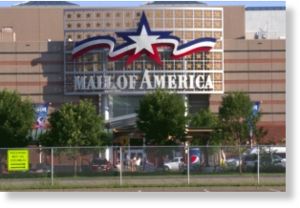
Bloomington, Minnesota - On May 1, 2008, at 4:59 p.m., Brad Kleinerman entered the spooky world of homeland security.
As he shopped for a children's watch inside the sprawling Mall of
America, two security guards approached and began questioning him.
Although he was not accused of wrongdoing, the guards filed a
confidential report about Kleinerman that was forwarded to local police.
The reason: Guards thought he might pose a threat because he had been looking at them in a suspicious way.
Najam Qureshi, owner of a kiosk that sold items from his native
Pakistan, also had his own experience with authorities after his father
left a cellphone on a table in the food court.
The consequence: An FBI agent showed up at the family's home, asking if
they knew anyone who might want to hurt the United States.
Mall of America officials say their security unit stops and questions on
average up to 1,200 people each year. With 4.2 million square feet
under one roof, the two-decade-old mall is a monument to suburban
shopping and entertainment. Nearly 100,000 people from around the world
pass through on a given day.
The interviews at the mall are part of a counterterrorism initiative
that acts as the private eyes and ears of law enforcement authorities
but has often ensnared innocent people, according to an investigation by
the Center for Investigative Reporting and NPR.
In many cases, the written reports were filed without the knowledge of
those interviewed by security. Several people named in the reports
learned from journalists that their birth dates, race, names of
employers and other personal information were compiled along with
surveillance images.
In some cases, the questioning appears to have the hallmarks of
profiling -- something that officials at the mall deny. In nearly
two-thirds of the cases reviewed, subjects are described as
African-American, people of Asian and Arabic descent, and other
minorities, according to an analysis of the documents.
Mall spokesman Dan Jasper said the private security guards would not
conduct interviews based on racial or ethnic characteristics because "we
may miss someone who truly does have harmful intent."
Much of the questioning at the mall has been done in public while
shoppers mill around, records show. Two people, a shopper and a mall
employee, also described being taken to a basement area for questioning.
Officials at the mall would not address individual cases.
"The government is not going to protect us free of charge, so we have to
do that ourselves," said Maureen Bausch, executive vice president of
business development at the mall. "We're lucky enough to be in the city
of Bloomington where they actually have a police substation here [in the
mall] ... They're great. But we are responsible for this building."
Reporters at the Center for Investigative Reporting and NPR obtained 125
suspicious activity reports totaling over 1,000 pages dating back to
Christmas Eve, 2005. The documents, provided by law enforcement
officials in Minnesota, give a glimpse inside the national campaign by
authorities to collect and share intelligence about possible threats.
The initiative exemplifies one of the enduring legacies of the terrorist
attacks 10 years ago: Organizations and individuals are now encouraged
by U.S. leaders to watch one another and report any signs of threats to
homeland security authorities.
There is no way for the public to know exactly how many suspicious
activity reports from the Mall of America have ended up with local,
state and federal authorities. CIR and NPR asked 29 law enforcement
agencies under open government laws for reports on suspicious
activities. Only the Bloomington Police Department and Minnesota's state
fusion center have turned over at least a portion of the paperwork.
In 2008, the mall's security director, Douglas Reynolds, told Congress
that the mall was the "number-one source of actionable intelligence"
provided to the state's fusion center, an intelligence hub created after
9/11 to pull together reports from an array of law enforcement sources.
Information from the suspicious activity reports generated at the mall
has been shared with Bloomington police, the FBI and, in at least four
cases, the federal Immigration and Customs Enforcement agency.
The push to encourage Americans to report suspicious activity began in
the aftermath of Sept. 11, 2001, when government officials and citizens
found out there had been hints about the attackers that intelligence
analysts had missed.
In the decade since, the Justice Department and Department of Homeland
Security have launched programs urging citizens to report suspicious
activity. The private sector, including the utility industry and other
businesses concerned with protecting "critical infrastructure," have
their own surveillance and reporting systems. Homeland Security
Secretary Janet Napolitano has made such reporting a priority.
Last year the Department of Homeland Security launched a promotional
campaign, "If you see something, say something," encouraging Americans
to report anything perceived as threatening.
Among those formally enlisted were parking attendants, Jewish groups,
stadium operators, landlords, security guards, fans of professional golf
and auto racing and retailers such as the Mall of America. Visitors
"may be subject to a security interview," the mall's website says.
The suspicious activity reports from the mall are rich with detail. They
contain personal information, sometimes including Social Security
numbers and the names of family members and friends. Some of the reports
include shoppers' travel plans.
Commander Jim Ryan of the Bloomington Police Department said shoppers
are not under arrest when stopped for questioning by private security.
He said even he would walk away if the questioning seemed excessive.
"I don't think that I would subject myself to that, personally," he
said. Ryan, however, defends security procedures at the mall.
Ryan said such reports are crucial to the nation's safety in the
post-9/11 era. He said the suspicious activity reports could be held by
his agency for two decades or longer. He acknowledged that the mall's
methods, and reports the security guards file, may "infringe on some
freedoms, unfortunately."
"We're charged with trying to keep people safe. We're trying to do it
the best way we can," he said. "You may be questioned at the Mall of
America about suspicious activity. It's something that may happen. It's
part of today's society."
Some national security and constitutional law specialists question the propriety and effectiveness of such reports.
Dale Watson, a former top counterterrorism official with the FBI, said
the mall's reports suggest that anyone could be targeted for intrusive
questioning and surveillance.
"If that had been one of my brothers that was stopped in a mall, I'd be
furious about it -- if I thought the police department had a file on
him, an information file about his activities in the mall without any
reasonable suspicion to investigate," said Watson, who played key roles
in the investigations of the 1995 Oklahoma City bombing and a 1998
attack on U.S. embassies in East Africa.
Shoppers, who for the most part had no idea that a visit to the mall led
to their personal information being shared with law enforcement,
reacted with anger and dismay when shown their reports.
"For all the 30 years that I have lived in the United States, I've never
been a suspect," said Emil Khalil. The California man was confronted at
the mall in June 2009 for taking pictures, and he said an FBI agent
later questioned him at the airport. "And I've never done anything
wrong."
Mike Rozin, chief of a special security unit at the mall since 2005,
acknowledged that the vast majority of people who come into contact with
his unit "have done nothing wrong, have no malicious intent."
"They just act in a suspicious manner that obligated me to investigate
further," Rozin said. "We talked to them for an average of five minutes,
and they're able to continue their shopping."
Francis Van Asten's experience with mall security lasted much longer.
On Nov. 9, 2008, the Bloomington resident videotaped a short road trip
from his home to the Mall of America. Van Asten, now 66, planned to send
it to his fiancée's family in Vietnam so they could see life in the
United States.
As he headed down an escalator, camera in hand, mall guards caught sight of him.
"Right away, I noticed he had a video camera and was recording the
rotunda area," a security guard wrote in a suspicious activity report.
Van Asten, a one-time missile system repairman for the Army, was
questioned for approximately two hours, records show. He was asked about
traveling to Vietnam and how he came to know people there. The FBI
Joint Terrorism Task Force was alerted. He was given a pat-down search,
and the FBI demanded that his memory card be confiscated "for further
analysis."
Authorities were concerned about his footage of an airplane landing at
Minnesota's nearby international airport. They also worried Van Asten
was conducting surveillance of mall property.
Exhausted and rattled, Van Asten had trouble finding his car after the ordeal was over.
"I sat down in my car and I cried, and I was shaking like a leaf," Van
Asten said in an interview at his home. "That kind of sensation doesn't
leave you real quickly when you've had an experience like that."
Bobbie Allen, a musician who lives in downtown Minneapolis, was stopped
for writing in a notebook. As he waited for a lunch date on June 25,
2007, Allen jotted down some words, which caught the attention of
security guard.
One guard wrote in Allen's suspicious activity report: "Before the male
would write in his notebook, it appeared as though he would look at his
watch. Periodically, the male would briefly look up from his notebook,
look around, and then continue writing."
Guards asked for his name and for whom he was waiting. Allen, who is
black, felt singled out for his race, according to the report. The guard
responded that he was "randomly selected" for an interview.
The guards called Bloomington police, after deciding Allen was
uncooperative and his note-taking "suspicious." Allen was cleared, but a
suspicious activity report was compiled, complete with surveillance
photo, age, height, address and more. Much of that information ended up
in a Bloomington police report.
Jeffrey Rosen, a law professor at George Washington University, said
such actions trample on traditional civil liberties protections and
shift unaccountable power into private hands.
Rosen said the risk of abuses is high, particularly if there turns out
to be a lack of proven results. "If all they're getting for amassing
suspicious activity reports on innocent people in government databases
is the arrest of a few low-level turnstile jumpers and shoplifters, that
doesn't seem very sensible," Rosen said.
In Allen's case, he responded in a way few others have: He complained to
the Minnesota Department of Human Rights and filed a lawsuit.
Department investigators concluded that there was probable cause to
support Allen's claim of racial discrimination.
Allen declined an interview, citing a settlement agreement reached with the mall.
Not everyone had a negative reaction to being written up. After a report
naming him was forwarded to the FBI, Sameer Khalil of Orange County,
Calif., said he believed that police and private security have an
important job they must do.
"I think [the mall's program] makes America safer," he said.
Businessman Najam Qureshi discovered how the suspicions at the mall can linger.
The FBI arrived on his doorstep shortly after a run-in with mall
security. His family moved from Pakistan to the United States when
Qureshi was 8. Police once pulled over their car for a minor traffic
violation, and Qureshi remembers his father saying, "You don't have to
fear the police here. They are here to help."
Qureshi opened a small kiosk at the mall so his aging father, a former
aeronautical engineer named Saleem, could keep busy. One day in early
2007, Saleem Qureshi left his cellphone in a mall food court. When he
returned for it, security personnel had established a "perimeter" around
the phone, along with other unattended items nearby that did not belong
to Saleem -- a stroller and two coolers.
The "suspicious" objects eventually were cleared by security, documents
show. But mall guards pursued Saleem Qureshi with questions.
"Qureshi moved around a lot when answering questions," security guard
Ashly Foster wrote in a report. "At one point, he moved to his kiosk and
proceeded to take items off of two shelves just to switch them around.
... He seemed to get agitated at points when I would ask more detailed
questions."
Four years after his father ended up in a suspicious activity report, his son was shown the report for the first time.
"Everybody that lives in this country," said Najam Qureshi, "is a person of interest as far as these reports are concerned."
The Center for Investigative Reporting, the nation's oldest
independent, nonprofit investigative news center, reported this story
along with National Public Radio. You can contact the reporters at
gwschulz-at-cironline.org, zwerdling-at-npr.org and
abecke-at-cironline.org.
Read the extended version on the Center for Investigative Reporting's project site.
The interviews at the mall are part of a counterterrorism initiative that acts as the private eyes and ears of law enforcement authorities but has often ensnared innocent people, according to an investigation by the Center for Investigative Reporting and NPR.
In many cases, the written reports were filed without the knowledge of those interviewed by security. Several people named in the reports learned from journalists that their birth dates, race, names of employers and other personal information were compiled along with surveillance images.
In some cases, the questioning appears to have the hallmarks of profiling -- something that officials at the mall deny. In nearly two-thirds of the cases reviewed, subjects are described as African-American, people of Asian and Arabic descent, and other minorities, according to an analysis of the documents.
Mall spokesman Dan Jasper said the private security guards would not conduct interviews based on racial or ethnic characteristics because "we may miss someone who truly does have harmful intent."
Much of the questioning at the mall has been done in public while shoppers mill around, records show. Two people, a shopper and a mall employee, also described being taken to a basement area for questioning. Officials at the mall would not address individual cases.
"The government is not going to protect us free of charge, so we have to do that ourselves," said Maureen Bausch, executive vice president of business development at the mall. "We're lucky enough to be in the city of Bloomington where they actually have a police substation here [in the mall] ... They're great. But we are responsible for this building."
Reporters at the Center for Investigative Reporting and NPR obtained 125 suspicious activity reports totaling over 1,000 pages dating back to Christmas Eve, 2005. The documents, provided by law enforcement officials in Minnesota, give a glimpse inside the national campaign by authorities to collect and share intelligence about possible threats.
The initiative exemplifies one of the enduring legacies of the terrorist attacks 10 years ago: Organizations and individuals are now encouraged by U.S. leaders to watch one another and report any signs of threats to homeland security authorities.
There is no way for the public to know exactly how many suspicious activity reports from the Mall of America have ended up with local, state and federal authorities. CIR and NPR asked 29 law enforcement agencies under open government laws for reports on suspicious activities. Only the Bloomington Police Department and Minnesota's state fusion center have turned over at least a portion of the paperwork.
In 2008, the mall's security director, Douglas Reynolds, told Congress that the mall was the "number-one source of actionable intelligence" provided to the state's fusion center, an intelligence hub created after 9/11 to pull together reports from an array of law enforcement sources.
Information from the suspicious activity reports generated at the mall has been shared with Bloomington police, the FBI and, in at least four cases, the federal Immigration and Customs Enforcement agency.
The push to encourage Americans to report suspicious activity began in the aftermath of Sept. 11, 2001, when government officials and citizens found out there had been hints about the attackers that intelligence analysts had missed.
In the decade since, the Justice Department and Department of Homeland Security have launched programs urging citizens to report suspicious activity. The private sector, including the utility industry and other businesses concerned with protecting "critical infrastructure," have their own surveillance and reporting systems. Homeland Security Secretary Janet Napolitano has made such reporting a priority.
Last year the Department of Homeland Security launched a promotional campaign, "If you see something, say something," encouraging Americans to report anything perceived as threatening.
Among those formally enlisted were parking attendants, Jewish groups, stadium operators, landlords, security guards, fans of professional golf and auto racing and retailers such as the Mall of America. Visitors "may be subject to a security interview," the mall's website says.
The suspicious activity reports from the mall are rich with detail. They contain personal information, sometimes including Social Security numbers and the names of family members and friends. Some of the reports include shoppers' travel plans.
Commander Jim Ryan of the Bloomington Police Department said shoppers are not under arrest when stopped for questioning by private security. He said even he would walk away if the questioning seemed excessive.
"I don't think that I would subject myself to that, personally," he said. Ryan, however, defends security procedures at the mall.
Ryan said such reports are crucial to the nation's safety in the post-9/11 era. He said the suspicious activity reports could be held by his agency for two decades or longer. He acknowledged that the mall's methods, and reports the security guards file, may "infringe on some freedoms, unfortunately."
"We're charged with trying to keep people safe. We're trying to do it the best way we can," he said. "You may be questioned at the Mall of America about suspicious activity. It's something that may happen. It's part of today's society."
Some national security and constitutional law specialists question the propriety and effectiveness of such reports.
Dale Watson, a former top counterterrorism official with the FBI, said the mall's reports suggest that anyone could be targeted for intrusive questioning and surveillance.
"If that had been one of my brothers that was stopped in a mall, I'd be furious about it -- if I thought the police department had a file on him, an information file about his activities in the mall without any reasonable suspicion to investigate," said Watson, who played key roles in the investigations of the 1995 Oklahoma City bombing and a 1998 attack on U.S. embassies in East Africa.
Shoppers, who for the most part had no idea that a visit to the mall led to their personal information being shared with law enforcement, reacted with anger and dismay when shown their reports.
"For all the 30 years that I have lived in the United States, I've never been a suspect," said Emil Khalil. The California man was confronted at the mall in June 2009 for taking pictures, and he said an FBI agent later questioned him at the airport. "And I've never done anything wrong."
Mike Rozin, chief of a special security unit at the mall since 2005, acknowledged that the vast majority of people who come into contact with his unit "have done nothing wrong, have no malicious intent."
"They just act in a suspicious manner that obligated me to investigate further," Rozin said. "We talked to them for an average of five minutes, and they're able to continue their shopping."
Francis Van Asten's experience with mall security lasted much longer.
On Nov. 9, 2008, the Bloomington resident videotaped a short road trip from his home to the Mall of America. Van Asten, now 66, planned to send it to his fiancée's family in Vietnam so they could see life in the United States.
As he headed down an escalator, camera in hand, mall guards caught sight of him.
"Right away, I noticed he had a video camera and was recording the rotunda area," a security guard wrote in a suspicious activity report.
Van Asten, a one-time missile system repairman for the Army, was questioned for approximately two hours, records show. He was asked about traveling to Vietnam and how he came to know people there. The FBI Joint Terrorism Task Force was alerted. He was given a pat-down search, and the FBI demanded that his memory card be confiscated "for further analysis."
Authorities were concerned about his footage of an airplane landing at Minnesota's nearby international airport. They also worried Van Asten was conducting surveillance of mall property.
Exhausted and rattled, Van Asten had trouble finding his car after the ordeal was over.
"I sat down in my car and I cried, and I was shaking like a leaf," Van Asten said in an interview at his home. "That kind of sensation doesn't leave you real quickly when you've had an experience like that."
Bobbie Allen, a musician who lives in downtown Minneapolis, was stopped for writing in a notebook. As he waited for a lunch date on June 25, 2007, Allen jotted down some words, which caught the attention of security guard.
One guard wrote in Allen's suspicious activity report: "Before the male would write in his notebook, it appeared as though he would look at his watch. Periodically, the male would briefly look up from his notebook, look around, and then continue writing."
Guards asked for his name and for whom he was waiting. Allen, who is black, felt singled out for his race, according to the report. The guard responded that he was "randomly selected" for an interview.
The guards called Bloomington police, after deciding Allen was uncooperative and his note-taking "suspicious." Allen was cleared, but a suspicious activity report was compiled, complete with surveillance photo, age, height, address and more. Much of that information ended up in a Bloomington police report.
Jeffrey Rosen, a law professor at George Washington University, said such actions trample on traditional civil liberties protections and shift unaccountable power into private hands.
Rosen said the risk of abuses is high, particularly if there turns out to be a lack of proven results. "If all they're getting for amassing suspicious activity reports on innocent people in government databases is the arrest of a few low-level turnstile jumpers and shoplifters, that doesn't seem very sensible," Rosen said.
In Allen's case, he responded in a way few others have: He complained to the Minnesota Department of Human Rights and filed a lawsuit. Department investigators concluded that there was probable cause to support Allen's claim of racial discrimination.
Allen declined an interview, citing a settlement agreement reached with the mall.
Not everyone had a negative reaction to being written up. After a report naming him was forwarded to the FBI, Sameer Khalil of Orange County, Calif., said he believed that police and private security have an important job they must do.
"I think [the mall's program] makes America safer," he said.
Businessman Najam Qureshi discovered how the suspicions at the mall can linger.
The FBI arrived on his doorstep shortly after a run-in with mall security. His family moved from Pakistan to the United States when Qureshi was 8. Police once pulled over their car for a minor traffic violation, and Qureshi remembers his father saying, "You don't have to fear the police here. They are here to help."
Qureshi opened a small kiosk at the mall so his aging father, a former aeronautical engineer named Saleem, could keep busy. One day in early 2007, Saleem Qureshi left his cellphone in a mall food court. When he returned for it, security personnel had established a "perimeter" around the phone, along with other unattended items nearby that did not belong to Saleem -- a stroller and two coolers.
The "suspicious" objects eventually were cleared by security, documents show. But mall guards pursued Saleem Qureshi with questions.
"Qureshi moved around a lot when answering questions," security guard Ashly Foster wrote in a report. "At one point, he moved to his kiosk and proceeded to take items off of two shelves just to switch them around. ... He seemed to get agitated at points when I would ask more detailed questions."
Four years after his father ended up in a suspicious activity report, his son was shown the report for the first time.
"Everybody that lives in this country," said Najam Qureshi, "is a person of interest as far as these reports are concerned."
The Center for Investigative Reporting, the nation's oldest independent, nonprofit investigative news center, reported this story along with National Public Radio. You can contact the reporters at gwschulz-at-cironline.org, zwerdling-at-npr.org and abecke-at-cironline.org.
Read the extended version on the Center for Investigative Reporting's project site.
The interviews at the mall are part of a counterterrorism initiative that acts as the private eyes and ears of law enforcement authorities but has often ensnared innocent people, according to an investigation by the Center for Investigative Reporting and NPR.
In many cases, the written reports were filed without the knowledge of those interviewed by security. Several people named in the reports learned from journalists that their birth dates, race, names of employers and other personal information were compiled along with surveillance images.
In some cases, the questioning appears to have the hallmarks of profiling -- something that officials at the mall deny. In nearly two-thirds of the cases reviewed, subjects are described as African-American, people of Asian and Arabic descent, and other minorities, according to an analysis of the documents.
Mall spokesman Dan Jasper said the private security guards would not conduct interviews based on racial or ethnic characteristics because "we may miss someone who truly does have harmful intent."
Much of the questioning at the mall has been done in public while shoppers mill around, records show. Two people, a shopper and a mall employee, also described being taken to a basement area for questioning. Officials at the mall would not address individual cases.
"The government is not going to protect us free of charge, so we have to do that ourselves," said Maureen Bausch, executive vice president of business development at the mall. "We're lucky enough to be in the city of Bloomington where they actually have a police substation here [in the mall] ... They're great. But we are responsible for this building."
Reporters at the Center for Investigative Reporting and NPR obtained 125 suspicious activity reports totaling over 1,000 pages dating back to Christmas Eve, 2005. The documents, provided by law enforcement officials in Minnesota, give a glimpse inside the national campaign by authorities to collect and share intelligence about possible threats.
The initiative exemplifies one of the enduring legacies of the terrorist attacks 10 years ago: Organizations and individuals are now encouraged by U.S. leaders to watch one another and report any signs of threats to homeland security authorities.
There is no way for the public to know exactly how many suspicious activity reports from the Mall of America have ended up with local, state and federal authorities. CIR and NPR asked 29 law enforcement agencies under open government laws for reports on suspicious activities. Only the Bloomington Police Department and Minnesota's state fusion center have turned over at least a portion of the paperwork.
In 2008, the mall's security director, Douglas Reynolds, told Congress that the mall was the "number-one source of actionable intelligence" provided to the state's fusion center, an intelligence hub created after 9/11 to pull together reports from an array of law enforcement sources.
Information from the suspicious activity reports generated at the mall has been shared with Bloomington police, the FBI and, in at least four cases, the federal Immigration and Customs Enforcement agency.
The push to encourage Americans to report suspicious activity began in the aftermath of Sept. 11, 2001, when government officials and citizens found out there had been hints about the attackers that intelligence analysts had missed.
In the decade since, the Justice Department and Department of Homeland Security have launched programs urging citizens to report suspicious activity. The private sector, including the utility industry and other businesses concerned with protecting "critical infrastructure," have their own surveillance and reporting systems. Homeland Security Secretary Janet Napolitano has made such reporting a priority.
Last year the Department of Homeland Security launched a promotional campaign, "If you see something, say something," encouraging Americans to report anything perceived as threatening.
Among those formally enlisted were parking attendants, Jewish groups, stadium operators, landlords, security guards, fans of professional golf and auto racing and retailers such as the Mall of America. Visitors "may be subject to a security interview," the mall's website says.
The suspicious activity reports from the mall are rich with detail. They contain personal information, sometimes including Social Security numbers and the names of family members and friends. Some of the reports include shoppers' travel plans.
Commander Jim Ryan of the Bloomington Police Department said shoppers are not under arrest when stopped for questioning by private security. He said even he would walk away if the questioning seemed excessive.
"I don't think that I would subject myself to that, personally," he said. Ryan, however, defends security procedures at the mall.
Ryan said such reports are crucial to the nation's safety in the post-9/11 era. He said the suspicious activity reports could be held by his agency for two decades or longer. He acknowledged that the mall's methods, and reports the security guards file, may "infringe on some freedoms, unfortunately."
"We're charged with trying to keep people safe. We're trying to do it the best way we can," he said. "You may be questioned at the Mall of America about suspicious activity. It's something that may happen. It's part of today's society."
Some national security and constitutional law specialists question the propriety and effectiveness of such reports.
Dale Watson, a former top counterterrorism official with the FBI, said the mall's reports suggest that anyone could be targeted for intrusive questioning and surveillance.
"If that had been one of my brothers that was stopped in a mall, I'd be furious about it -- if I thought the police department had a file on him, an information file about his activities in the mall without any reasonable suspicion to investigate," said Watson, who played key roles in the investigations of the 1995 Oklahoma City bombing and a 1998 attack on U.S. embassies in East Africa.
Shoppers, who for the most part had no idea that a visit to the mall led to their personal information being shared with law enforcement, reacted with anger and dismay when shown their reports.
"For all the 30 years that I have lived in the United States, I've never been a suspect," said Emil Khalil. The California man was confronted at the mall in June 2009 for taking pictures, and he said an FBI agent later questioned him at the airport. "And I've never done anything wrong."
Mike Rozin, chief of a special security unit at the mall since 2005, acknowledged that the vast majority of people who come into contact with his unit "have done nothing wrong, have no malicious intent."
"They just act in a suspicious manner that obligated me to investigate further," Rozin said. "We talked to them for an average of five minutes, and they're able to continue their shopping."
Francis Van Asten's experience with mall security lasted much longer.
On Nov. 9, 2008, the Bloomington resident videotaped a short road trip from his home to the Mall of America. Van Asten, now 66, planned to send it to his fiancée's family in Vietnam so they could see life in the United States.
As he headed down an escalator, camera in hand, mall guards caught sight of him.
"Right away, I noticed he had a video camera and was recording the rotunda area," a security guard wrote in a suspicious activity report.
Van Asten, a one-time missile system repairman for the Army, was questioned for approximately two hours, records show. He was asked about traveling to Vietnam and how he came to know people there. The FBI Joint Terrorism Task Force was alerted. He was given a pat-down search, and the FBI demanded that his memory card be confiscated "for further analysis."
Authorities were concerned about his footage of an airplane landing at Minnesota's nearby international airport. They also worried Van Asten was conducting surveillance of mall property.
Exhausted and rattled, Van Asten had trouble finding his car after the ordeal was over.
"I sat down in my car and I cried, and I was shaking like a leaf," Van Asten said in an interview at his home. "That kind of sensation doesn't leave you real quickly when you've had an experience like that."
Bobbie Allen, a musician who lives in downtown Minneapolis, was stopped for writing in a notebook. As he waited for a lunch date on June 25, 2007, Allen jotted down some words, which caught the attention of security guard.
One guard wrote in Allen's suspicious activity report: "Before the male would write in his notebook, it appeared as though he would look at his watch. Periodically, the male would briefly look up from his notebook, look around, and then continue writing."
Guards asked for his name and for whom he was waiting. Allen, who is black, felt singled out for his race, according to the report. The guard responded that he was "randomly selected" for an interview.
The guards called Bloomington police, after deciding Allen was uncooperative and his note-taking "suspicious." Allen was cleared, but a suspicious activity report was compiled, complete with surveillance photo, age, height, address and more. Much of that information ended up in a Bloomington police report.
Jeffrey Rosen, a law professor at George Washington University, said such actions trample on traditional civil liberties protections and shift unaccountable power into private hands.
Rosen said the risk of abuses is high, particularly if there turns out to be a lack of proven results. "If all they're getting for amassing suspicious activity reports on innocent people in government databases is the arrest of a few low-level turnstile jumpers and shoplifters, that doesn't seem very sensible," Rosen said.
In Allen's case, he responded in a way few others have: He complained to the Minnesota Department of Human Rights and filed a lawsuit. Department investigators concluded that there was probable cause to support Allen's claim of racial discrimination.
Allen declined an interview, citing a settlement agreement reached with the mall.
Not everyone had a negative reaction to being written up. After a report naming him was forwarded to the FBI, Sameer Khalil of Orange County, Calif., said he believed that police and private security have an important job they must do.
"I think [the mall's program] makes America safer," he said.
Businessman Najam Qureshi discovered how the suspicions at the mall can linger.
The FBI arrived on his doorstep shortly after a run-in with mall security. His family moved from Pakistan to the United States when Qureshi was 8. Police once pulled over their car for a minor traffic violation, and Qureshi remembers his father saying, "You don't have to fear the police here. They are here to help."
Qureshi opened a small kiosk at the mall so his aging father, a former aeronautical engineer named Saleem, could keep busy. One day in early 2007, Saleem Qureshi left his cellphone in a mall food court. When he returned for it, security personnel had established a "perimeter" around the phone, along with other unattended items nearby that did not belong to Saleem -- a stroller and two coolers.
The "suspicious" objects eventually were cleared by security, documents show. But mall guards pursued Saleem Qureshi with questions.
"Qureshi moved around a lot when answering questions," security guard Ashly Foster wrote in a report. "At one point, he moved to his kiosk and proceeded to take items off of two shelves just to switch them around. ... He seemed to get agitated at points when I would ask more detailed questions."
Four years after his father ended up in a suspicious activity report, his son was shown the report for the first time.
"Everybody that lives in this country," said Najam Qureshi, "is a person of interest as far as these reports are concerned."
The Center for Investigative Reporting, the nation's oldest independent, nonprofit investigative news center, reported this story along with National Public Radio. You can contact the reporters at gwschulz-at-cironline.org, zwerdling-at-npr.org and abecke-at-cironline.org.
Read the extended version on the Center for Investigative Reporting's project site.


 Remember this image: it's the national police state on the march